


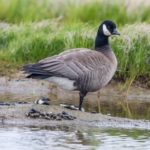
The activities are as follows: Each spring, millions of birds return to the Yukon-Kuskokwim Delta. This delta is where two of the largest rivers in Alaska empty into the Bering Sea. It is also one of the world’s most significant habitats for geese to breed and raise their young. With all these geese coming together in one
News & Events
Poop, poop, goose!
Sink or source? How grazing geese impact the carbon cycle
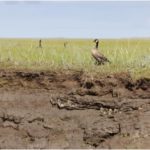
The activities are as follows: “If it wasn’t for the geese, you and I would not be here today because our ancestors would not have made it. When long, hard winters emptied people’s food caches early, starvation loomed. Return of geese in April saved us.” – Chuck Hunt, born and raised on the Yukon-Kuskokwim Delta
Helping students hear the stories that data tell

Article Highlights A data literacy program that’s also changing students’ relationships with science and scientists is entering its third round of funding with a new $1.5 million grant from the National Science Foundation. In collaboration with Auburn University, the Data Nuggets program at the W.K. Kellogg Biological Station, or KBS, will work to identify factors that improve equity
Seagrass survival in a super salty lagoon
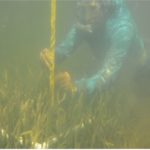
The activities are as follows: Seagrasses are a group of plants that can live completely submerged underwater. They grow in the salty waters along coastal areas. Seagrasses are important because they provide a lot of benefits for other species. Like land plants, seagrasses use sunlight and carbon dioxide to grow and produce oxygen in a
Auburn and MSU collaborate on NSF IUSE grant to determine what makes an effective scientific role model

Scientific role models increase student success in their science courses as well as inspire students to pursue science careers. The Ballen Lab at Auburn University has completed significant research demonstrating that role models with diverse identities are lacking in undergraduate biology classrooms. Students with identities that are not represented in their undergraduate science courses do not have many
Eavesdropping on the ocean
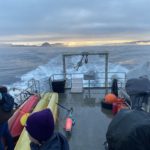
The activities are as follows: Most of our energy in the United States comes from fossil fuels like natural gas, coal, and oil. These energy sources are efficient, but they release greenhouse gases into the atmosphere when burned. They are also non-renewable, meaning there is a limited supply. Renewable energy options collect energy from sources
The prairie burns with desire
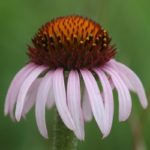
The activities are as follows: Fire plays a crucial role for prairie habitats across North America. Native Americans have long observed that lush and green pastures grow after a wildfire. In many areas, it is part of current and historical native culture to imitate this natural process by deliberately burning the prairie in a controlled way.
Which tundra plants will win the climate change race?
The activities are as follows: The Arctic, the northernmost region of our planet, is home to a unique biome known as tundra. While you might think of the arctic tundra as a blanket of snow and polar bears, this vast landscape supports a diversity of unique plant and animal species. The tundra is an area without trees
The sound of seagrass
The activities are as follows: Seagrasses are a type of plant that grows underwater. They have long, green leaves and form thick underwater meadows. Seagrass meadows have high plant productivity, or growth, which could help offset the effects of climate change. A major driver of climate change is excess carbon in the atmosphere. Plants can help by
A difficult drought
The activities are as follows: Most people use fossil fuels like natural gas, coal, and oil daily. We use them to generate much of the energy that gets us from place to place, power our homes, and more. Fossil fuels are very efficient at producing energy, but they also come with negative consequences. For example, when burned,