Live fast, die young?

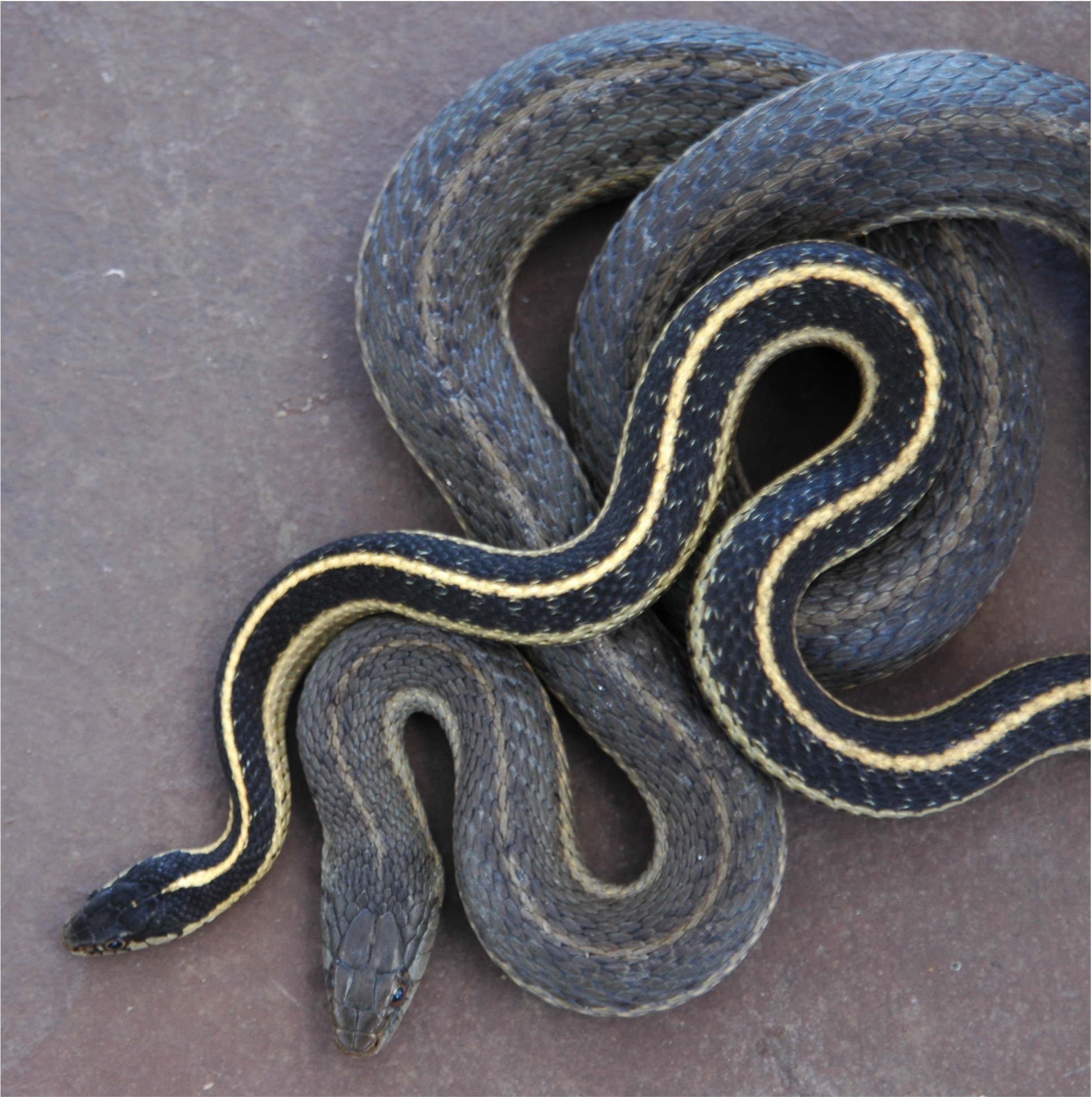
Fast living snake (grey checked)
Slow living snake (dark with yellow stripe)
The two garter snake ecotypes – Fast living snake with grey checked pattern, and slow living snake with dark with yellow stripe.

Garter snakes are a common sight across North America, but one small species in Northern California has helped scientists learn a lot about how animals adapt to their environment. Since 1972, a long lineage of scientists has studied these snakes and passed their data down through generations. This long-term dataset allows scientists to ask questions about how replicate populations change over time.

These garter snakes live in two very different types of habitats. Some populations live along lakeshores at low elevations. These areas have rocky shorelines, warmer temperatures, and steady access to water and food like small fish and frogs. However, these snakes also face more predators. Other populations live in high-elevation mountain meadows. These habitats are cooler and covered in grass. Water and food are not always available and can change each year depending on snow and rain. Because these habitats are so different, the snakes in each place experience different challenges.

Over time, these differences have led to the evolution of two distinct ecotypes. Ecotypes are groups within a species that have adapted to their local environment. The lakeshore and meadow snakes differ in both their physical traits and their genetics. They also differ in how they grow, reproduce, and survive—traits known as life history strategies.

Life history strategies are often described along a spectrum from “fast” to “slow.” Lakeshore snakes have a “fast” life history. They grow quickly, reach adulthood sooner, are larger at adulthood, and produce larger and more frequent litters of offspring. In contrast, meadow snakes have a “slow” life history. They grow more slowly, reach adulthood later, have a smaller body size, and have fewer, less frequent litters.

Kaitlyn became interested in these snakes after a surprising start to her career. Interested in reptiles since childhood, she originally moved to Texas to join a lab that was studying turtles. Unfortunately, only a few weeks in, the grant money supporting her position fell through – right after she moved from Wisconsin to Texas! Luckily, another researcher invited her to join a lab studying snakes. After earning her Master’s degree, Kaitlyn continued this work during her PhD with her collaborator, Anne.

Kaitlyn and Anne wanted to understand how these snake populations are surviving today, especially after years of severe drought in California. They wondered if survival rates had changed over time and whether snakes in lakeshore and meadow habitats survived differently.
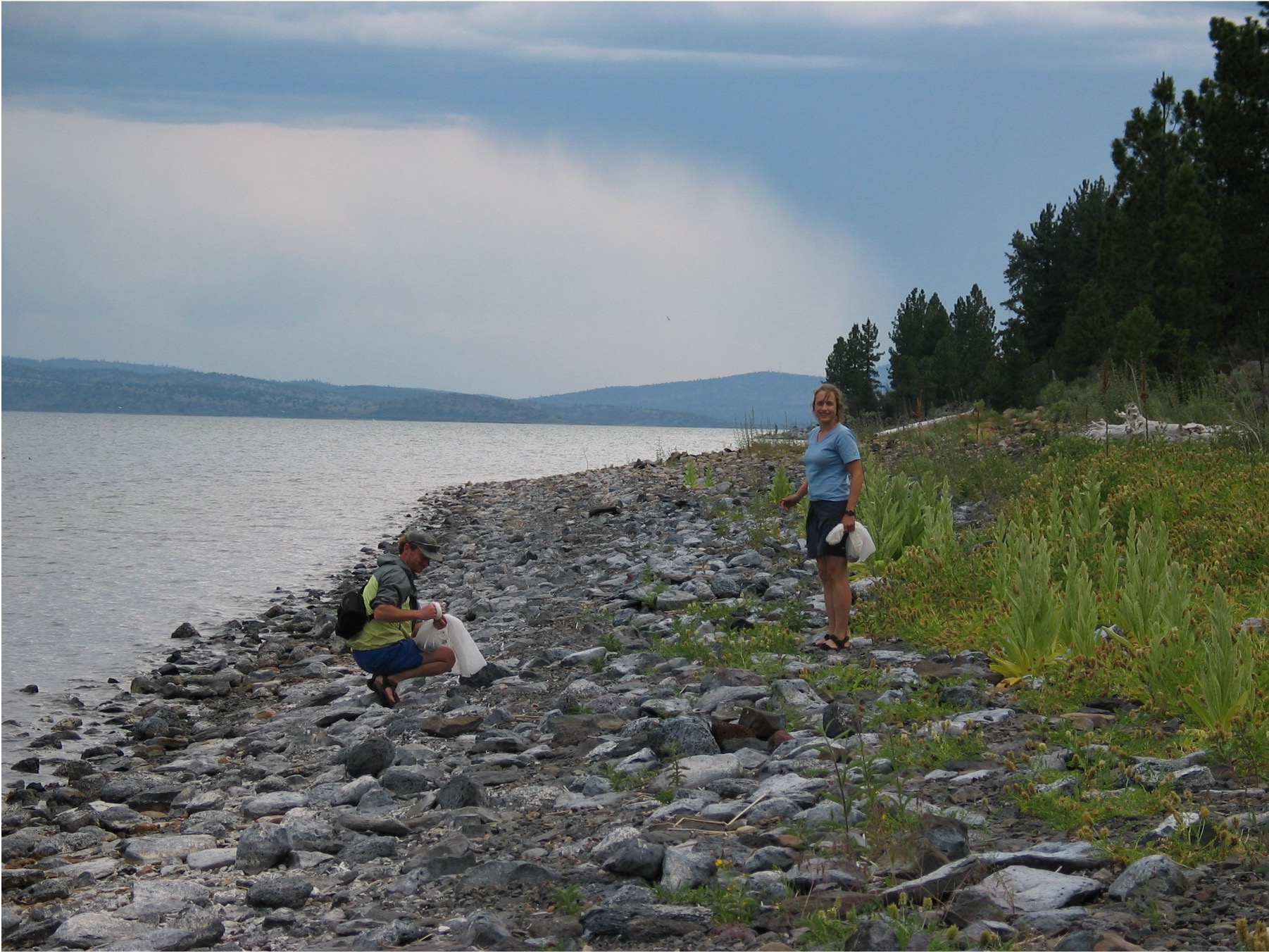
Scientists standing on a rocky lakeshore looking for snakes.
Flipping rocks and reaching into stinging nettle at Lakeshore sites.

To answer these questions, Anne and Kaitlyn wanted to take a fresh look at snake survival rates. They went out into the field to collect their own data, and compared their estimates to over 50 years of prior data collection. Both the historic and current data were collected using the method called capture-mark-recapture. In this method, researchers catch snakes, measure traits like size and weight, and give each snake a unique mark before releasing it back into the wild. If a snake is caught again later, scientists can track how it has grown. Not all snakes are recaptured. These data can be used to estimate survival rates, though some snakes may have moved away or avoided being caught.

Because it is hard to know the exact age of each snake, Kaitlyn grouped them into four age classes based on size: neonates (newborns), juvenilesyoung adults, and old adults. She then used statistical models to use her capture-mark-recapture dataset to estimate the probability of survival for each group. Kaitlyn predicted that meadow snakes, with their “slow” life history strategy, would have higher survival rates than lakeshore snakes. She also expected this difference to be greatest in young snakes.

Featured scientists: Kaitlyn Holden (she/her) and Anne Bronikowski (she/her) from Michigan State University

Flesch–Kincaid Reading Grade Level = 9.4

Additional Teacher Resources:

  • Scientist profile: Anne Bronikowski has a scientist profile to supplement this activity. Have students read more about her research, personal life, and career advice as a way to share contemporary scientist role models with students!
  • You can learn more about the IISAGE (Integration Initiative: Sex, Aging, Genomics, and Evolution) project here. This initiative is a collaborative effort to learn more about the mechanisms of sex-specific differences in aging and features research with a variety of organisms.
  • Visit this page for additional scientist profiles and Data Nuggets featuring IISAGE research.
What wakes the squirrels?

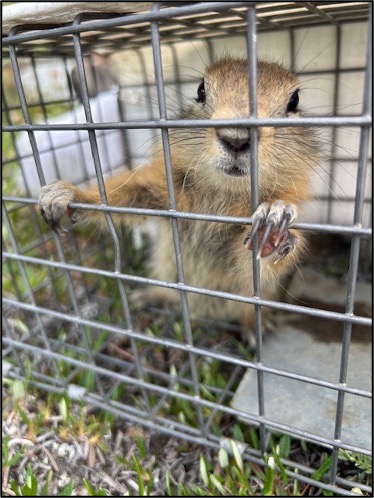
An arctic ground squirrel checking out the scientists from inside a trap
An arctic ground squirrel checking out the scientists from inside a trap. Photo by Rachel Rigenhagen.

The activities are as follows:

The Arctic is home to a unique biome, known as tundra. Found at Earth’s northernmost region, the tundra ecosystem is defined by frozen land. Permafrost is a thick underground layer of organic matter, soil, rock, and ice that has been frozen for at least two full years. Each summer as the temperature warms, a thin upper layer of frozen soil thaws, refreezing again the following winter.

Although the tundra might be far away from where most people live, it is connected to the entire globe through the atmosphere. This means it is affected by climate change, just like other places on Earth. In the tundra, increasing temperatures are causing snow to melt and the top layer of permafrost to thaw earlier each year.

Arctic ground squirrels, also called siksik (pronounced shrick-shrick) in the Inuktitut language, are an important mammal species that call the tundra home. They hibernate for roughly eight months – the longest of any mammal in the world. As they hibernate, the snow and frozen permafrost insulate their burrows and protect them from severe cold. As the summer months approach, the squirrels emerge and move above ground. Their mating season begins immediately after hibernation ends. With only four months out of their burrows, they have to maximize their time! 

Cory is a scientist who lives in Colorado but travels to the Arctic to do research at Toolik Field Station. For over 25 years, Cory and his research team have been studying the ground squirrel populations. While at Toolik recently, Cory was surprised to discover that male and female ground squirrels were emerging from hibernation on different schedules. He is worried these mismatches could be due to climate change. 

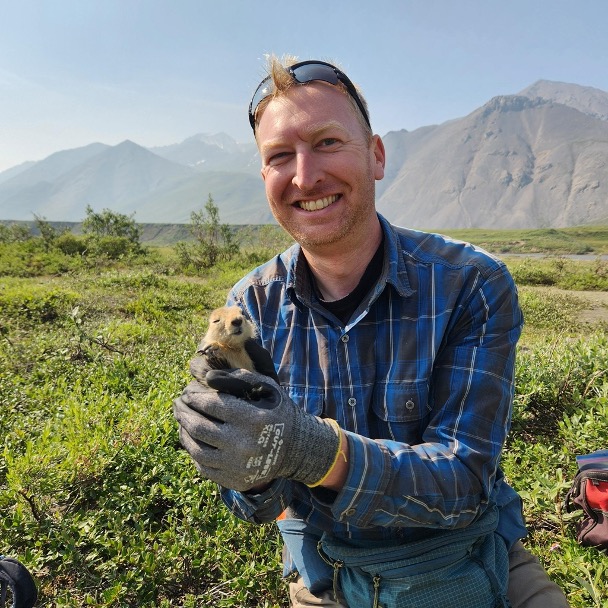
Austin holding an arctic ground squirrel that has been tagged in front of an Arctic scene background.
Austin, a PhD student in Cory’s lab, releases an arctic ground squirrel that has been tagged. Photo by Rachel Rigenhagen.

This made Cory wonder how ground squirrels know when to come out of their burrow. He suspected that ground squirrels use cues from their environment, such as increasing temperatures, permafrost thaw levels, or the length of time they have been in hibernation. Some of these environmental cues, such as the timing of permafrost thawing, are affected by increased temperatures. Other cues are not affected by temperature, such as the length of time squirrels have been hibernating. If males and females are using different cues, this could be why they are coming out at different times.

To investigate his idea, Cory and his research team turned to data they have been collecting over time. Each year, the research team temporarily captures squirrels. They record each squirrel’s sex, give them a unique ID, and put collars on them before releasing them. The collars can detect light, which is used to know when the squirrels are above ground. For each squirrel, the team records the first date that light was detected after hibernation, called the emergence date. Cory used Julian dates, which start with January 1 as Day 1 and continue to count up by one for each day. 

Cory also looked at the data on snowmelt as a potential environmental cue that the squirrels were using. Each year Cory’s team installs cameras on tall towers so that they can use images to measure daily snow cover. When no snow was detected, they measured this as the snowmelt date. Using these two sources of data, they can look for any patterns in emergence dates and spring snow melt. 

Featured scientist: Cory Williams (he/him) from Colorado State University and Toolik Field Station. Written by Claire Gunder (she/they) and Rachel Rigenhagen (she/her), Avalon School, St. Paul, Minnesota.

Flesch–Kincaid Reading Grade Level = 8.7

Toxic legacy

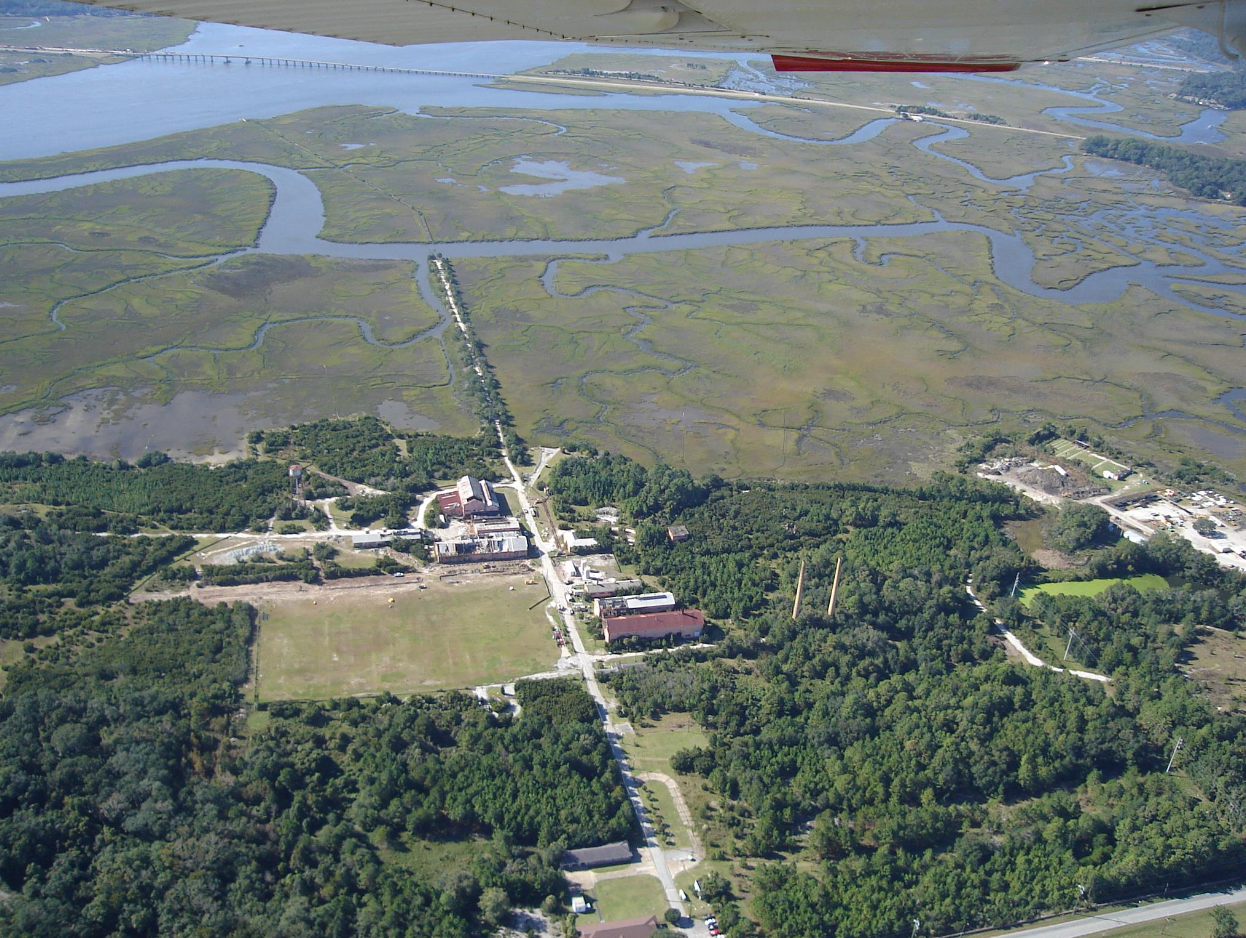
View of one of the Superfund Sites in Glynn County, courtesy of Glynn Environmental Coalition Archives, circa 2009.

The activities are as follows:

Superfund site is a place that is so polluted by chemicals or other contaminants that it poses a risk to surrounding wildlife and people. These are often former industrial sites that polluted the land or water with toxic and hazardous waste.

In Glynn County, Georgia there are four Superfund Sites on the National Priorities List by the US EPA. These sites are found to be particularly hazardous. Research studies in the Glynn County have shown that these contaminants show up in the local environment. For example, they have found some of these chemicals in the nearby soil and water. They can also accumulate in the tissues of organisms and have been found in high levels in certain coastal animals, such as birds, fish, and dolphins. Eating fish from nearby rivers is likely one way that humans have been exposed to these chemicals. 

Many residents have known about the pollution for a long time, but felt like their concerns were being ignored. Therefore, community members contacted scientists at the University of Georgia and Emory University for research expertise. Together, local residents, organizations and scientists designed a study to assess whether or not people living in Glynn County have been exposed to the industrial chemicals. It was critical that the results were shared back with the community so they could avoid future exposure to the harmful chemicals.

Together, the team decided to focus on a few chemicals of interest, specifically toxaphene and PCBs. Both types of chemicals do not break down easily in the environment. Once these compounds are in our environment, they can stay there for decades! For this reason, toxaphene and PCBs are known as “persistent” chemicals.

Toxaphene is a mixture made up of many different chemical compounds. Common toxaphene types include toxaphene-26 and toxaphene-50. Toxaphene was produced in Glynn County and used as a pesticide for over 30 years, primarily to kill boll weevils that ate cotton plants. It is thought to be a carcinogen, meaning that it has been linked to causing certain types of cancer. It is now banned in the United States, but it still remains in the environment in some places. 

Polychlorinated biphenyls, called PCBs, are a group of synthetic chemicals that had many different industrial uses. PCBs were banned in the United States in 1979 due to their potential health effects, but were used in hundreds of industrial processes. PCBs may still be present in many different products we use today including transformers, plastics, paints and more! A PCB called Aroclor 1268 is the primary concern in Glynn County. Scientists can measure components of this chemical in the environment. In humans, PCBs are known to harm the immune, reproductive, endocrine, and nervous systems. PCBs are also probable carcinogens. Like toxaphene, PCBs are now banned.  

The scientists and community members wanted to compare chemical levels in Glynn County residents to the general population to see if living near Superfund sites may have increased their risk of exposure to dangerous chemicals. One hundred adult residents from the area participated in this study. All participants had lived in the area for 10 years or more. Each participant completed a short survey that shared details of their lives in the area and gave a blood sample. 

The scientist team at Emory University, led by Dana Barr, analyzed the blood samples for toxaphene and PCBs. These levels were then compared to levels found in the general reference population outside of Glynn County. Participants received their individual results, and a summary of the results was also shared at a community meeting. 

Featured scientist: Dana Barr from Emory University with Anita Collins and Glynn County Community Partners. Written by: Laura Rogers and Healthy Coastal Neighborhoods Coalition.

Flesch–Kincaid Reading Grade Level = 10.2

There is one scientific paper associated with the data in this Data Nugget. The citation and PDF of the paper is below.

Jenison Fund at MSU supports Data Nuggets after NSF terminates grant

In May of 2025, the NSF terminated our collaborative Data Nuggets grant between Michigan State University and Auburn University titled, Collaborative Research: Sharing Scientist Role Model Stories to Improve Equity and Success in Undergraduate STEM Education. At the time of termination over $1 million in unspent funds remained, which would have gone towards personnel and research activities.

In response to situations like ours, where research was disrupted by changes to Federal policy, Michigan State University launched the Jenison Fund Career and Research Continuity Support program. This strategic initiative led by MSU’s Office of the President, Provost, and Office of Research and Innovation to provide targeted support for projects like ours that were cancelled but can be brought to a meaningful pause point. 

The Jenison Fund offers our collaborative team the ability to complete a paired-down version of our proposed study and continue the Data Nuggets program. We are using this time to seek future funding support, continue developing data literacy and science role model resources, and complete a research study undergraduate classrooms.

Thank you for your interest in Data Nuggets, and for supporting our work as we navigate these challenges and envision the future of the Data Nuggets program!

Already hard at work on our next proposal!

The science of stamen loss

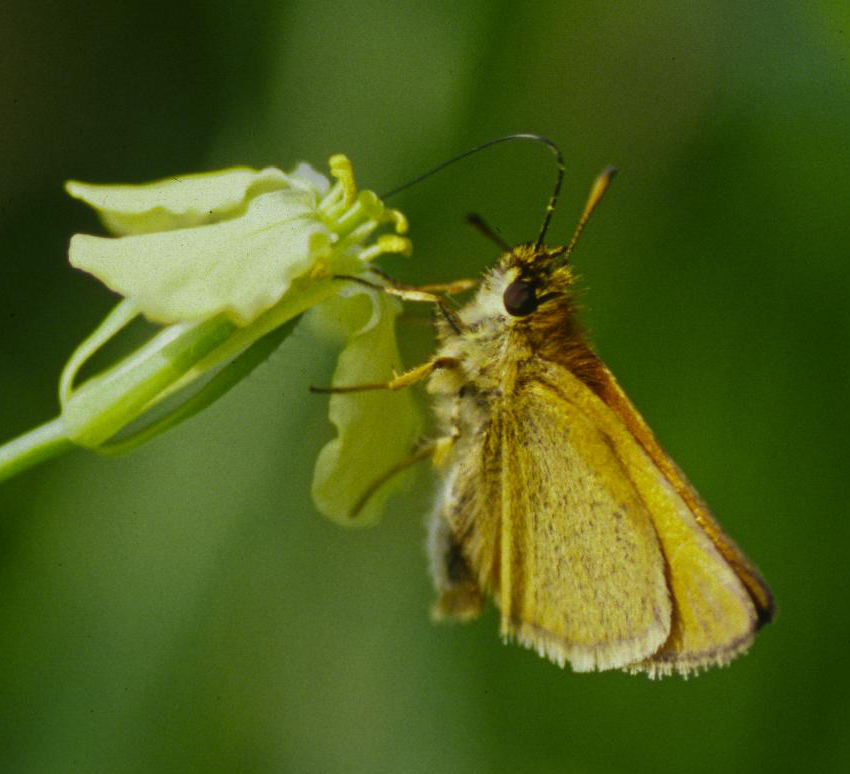
A pollinator visiting a mustard flower, drinking nectar and picking up pollen from anthers.

The activities are as follows:

Plants and animals have adaptations, or traits that help them survive and pass on more of their genes to the next generation. Flowers are a key adaptation for plants because they help the attract pollinators and reproduce.

Flowers come in many different shapes, sizes, colors, and forms. While flowers as a whole are an adaptation, traits within flowers are often adaptations themselves. For example, different flower colors attract different types of animals to the plant. Some flowers make nectar that gives animals a food reward for visiting. Other plants have small flowers with no petals so that pollen can be easily picked up and travel by wind.

Many of the animals that visit the plant serve as pollinators. Pollinators help plants reproduce by bringing reproductive parts together. Pollination happens when pollen from the stamen reaches the stigma. This is needed for seeds to form. By moving pollen, pollinators help plants make more seeds. More seeds lead to more plants in the next generation. Small differences in flower traits can change which plant is the most successful at reproducing and setting seed.

Jeff is a scientist studying a very particular flower shape seen in plants of the mustard family. Most plants in this family have flowers with 4 long stamens and 2 short stamens. No other plants have this shape, and no one knows why! The short stamens are a particular mystery.

Jeff wanted to see why mustards might have these short stamens. He thought that short stamens are an adaptation because they make it harder for pollinators to reach the pollen, so that more pollen would be left over for later pollinators. This might be beneficial because the first pollinator visiting the flower wouldn’t be able to take all the pollen, leaving none for the following visitors. If his hypothesis was correct, he predicted that short stamens would have less pollen removed with each pollinator visit compared the long stamens.

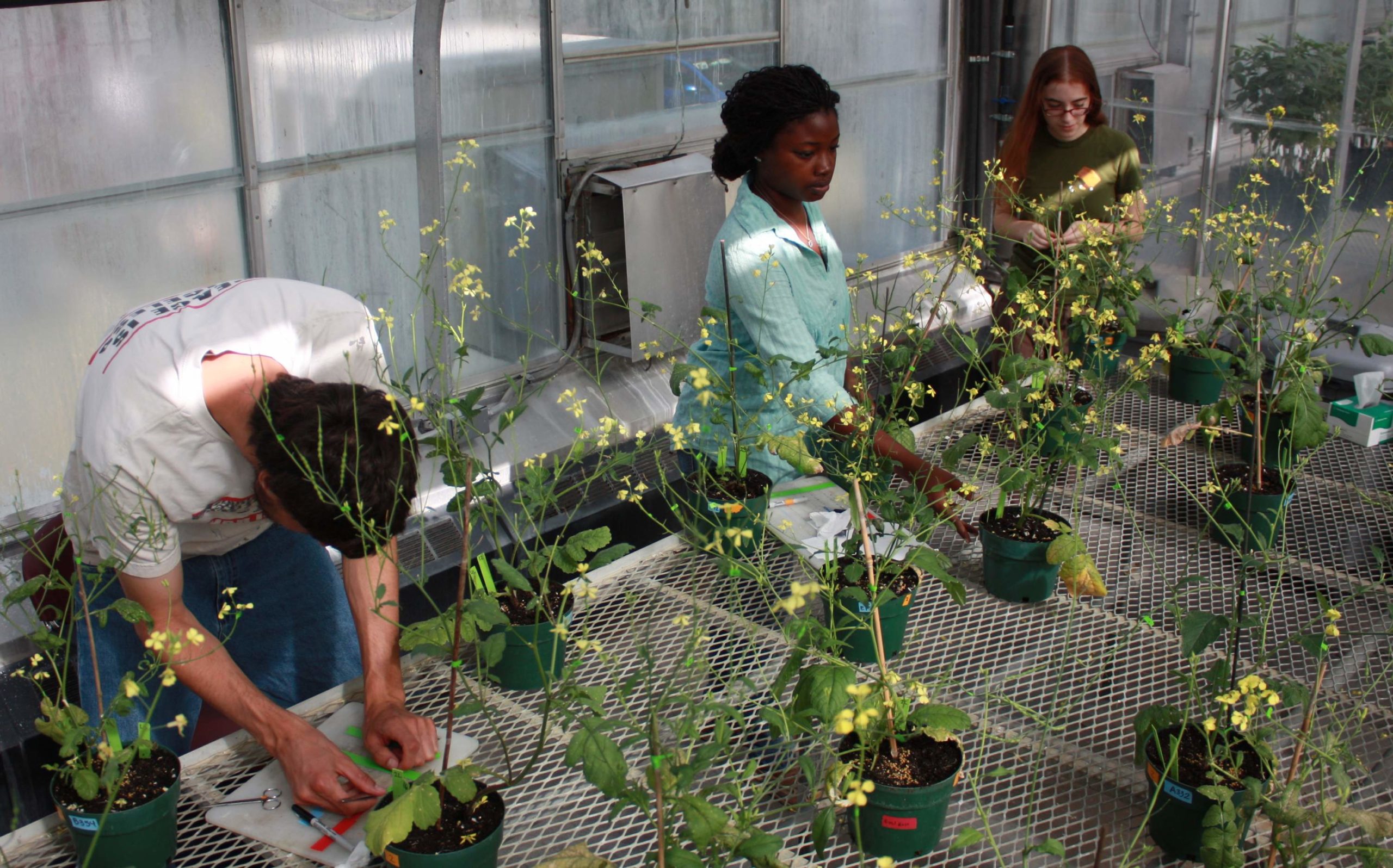
Members of the Conner Lab taking measurements of pollen found on the anthers of short and long stamens.

To collect his data, Jeff and other scientists in his lab needed to measure how much pollen was removed by pollinators on short and long stamens. To do this, they grew mustard plants in the greenhouse and let them flower. This made sure no pollinators could visit the plants before the experiment. Next, they exposed the plants to the three most common pollinators for mustards – bumblebees, small bees, and syrphid flies. To test honeybees, plants were put into flight cages with bees inside. To test small bees and syrphids, plants were put outside. Pollinators chose the flower to visit. After each visit, the lab counted the pollen on the visited flower. They then compared it to the amount of pollen on a flower that was not visited. They used these values to calculate the percent pollen removed. This was repeated for short and long stamens.

Featured scientists: Jeff Conner (he/him) from the W.K. Kellogg Biological Station. Written with Kirsten Salonga, Justice High School, Research Experience for Teachers.

Flesch–Kincaid Reading Grade Level = 7.6

Additional teacher resource related to this Data Nugget:

The data featured in this activity has been published. If you are interested in having students read primary scientific literature, they can complete this Data Nugget and then explore the full study here: 

Elizabeth Schultheis awarded fellowship to tackle science misconceptions

Dr. Elizabeth Schultheis, co-Founder of Data Nuggets and Education and Outreach Coordinator at the W. K. Kellogg Biological Station’s Long Term Ecological Research Program, has been named a 2025 Sound Science Fellow by the National Center for Science Education (NCSE). This prestigious fellowship, aimed at advancing the teaching of evolution, climate change, and accurate scientific education, will provide six scholars with unique opportunities to engage in deep exploration and collaboration, building upon NCSE’s mission to ensure accurate and evidence-based science education in K-12 schools nationwide.

The Sound Science Fellowship is designed to address the ongoing challenges faced by teachers as they navigate issues such as scientific misinformation, evolving educational standards, and societal resistance to critical scientific topics. “We are so excited to welcome this exceptional group of scholars into the second cohort of the Sound Science Fellowship,” said NCSE Executive Director Amanda L. Townley. “These fellows are passionate about inspiring the next generation of scientifically literate citizens, and through this fellowship, they will have opportunities to inform, support, and expand our understanding and approaches to address challenges to the teaching and learning of topics such as evolution and climate science.”

The 2025 Sound Science Fellows were selected based on their dedication to science education and science teacher education, their proven ability to engage critically in research and teaching spaces, and their commitment to upholding the highest standards of scientific accuracy. As part of the fellowship, each fellow will work closely with experts in the fields of evolutionary biology or climate science as well as pedagogy to develop our understanding of best practices in education and emerging challenges while contributing to ongoing efforts to improve science education nationwide.

Along with Schultheis, the 2025 Sound Science Fellows are: Kelly Feille, Associate Professor of Science Education at the University of Oklahoma; Isaiah Kent-Schneider, Associate Professor of Science Education at Purdue University; Lauren Madden, Professor of Elementary Science Education at The College of New Jersey; Irene Marti Gil, Educational Outreach Coordinator at Louisiana State University Museum of Natural Science; and Chelsea McClure, Assistant Professor of STEM at The Notre Dame of Maryland University.

“These educators are at the forefront of ensuring that future generations are equipped to understand and engage with the most important scientific issues of our time,” Townley said. Schultheis will serve a term of two years. During her tenure, she will work on individual and collaborative projects, attend seminars with scientists and education leaders, and contribute to NCSE’s broader mission to promote and defend high-quality science education across the nation.

For more information about the Sound Science Fellowship and the National Center for Science Education, please visit: https://ncse.ngo/supporting-teachers/sound-science-fellowship .

*****

Contact: Paul Oh, NCSE Director of Communications, oh@ncse.ngo

Join Data Nuggets at NABT 2025!

We are looking forward to sharing Data Nuggets at the 2025 NABT Professional Development Conference. NABT will be held from October 30th through November 2nd at the St. Louis Union Station Hotel in St. Louis, Missouri. Details are below!

  • Title: Authentic scientific research and data for the classroom with Data Nuggets
  • Description: Data Nuggets are free resources, co-designed by scientists and teachers to bring authentic data and research into classrooms. They highlight the true process of science, along with any surprises along the way. In this hands-on Huxley Award session we will demonstrate best practices for their use in biology classrooms.
  • Presenter: Dr. Elizabeth Schultheis
  • Date & Time: Thursday, October 30, 2025 at 12:30 PM–2:30 PM
  • Location: Midway Suite 7 & 8
Hands-on Data Nuggets workshop to learn about the program and go through classroom-ready example activities!

Data Nuggets continues despite NSF termination of $1.5M Grant

On Friday, May 9th, the National Science Foundation (NSF) terminated a collaborative research grant shared between Michigan State University and Auburn University, “Sharing Scientist Role Model Stories to Improve Equity and Success in Undergraduate STEM Education”, which had over $1M in unused funds remaining. We join over 1,600 grants abruptly terminated by NSF in recent months, affecting vital research, education, and open science efforts nationally.

NSF has been a critical partner in fueling the Data Nuggets team’s innovations and growth at Michigan State University. In fact, NSF funded the collaboration between scientists and K-12 teachers that sparked the development of Data Nuggets in 2010. Data Nuggets provide over 140 free data literacy activities that reach tens of thousands of educators and countless students per year. Without NSF’s historic investments and continued support, our wildly popular and effective data literacy program would not exist

By terminating our collaborative grant, financial support and personnel needed to run this program no longer exist. We are committed to maintaining the existing collection of publicly available Data Nugget resources and continue to provide them for free. However, we will need to revise our operational model in order to develop and disseminate new activities. Additionally, we will no longer be able to conduct and disseminate foundational educational research to increase our understanding of the best teaching practices for using activities featuring scientists within classroom materials. 

The sudden termination of our work is not only devastating for the programmatic and research team – it also wastes years of previous NSF-supported work and jeopardizes a future we envision filled with free, interactive learning resources to benefit millions of students and educators. In addition, the termination has directly prevented the hiring of 5 early career scientists as well as over 10 undergraduates who would have been trained in science communication, curriculum development, and discipline-based education research. 

Our terminated grant, “Sharing Scientist Role Model Stories to Improve Equity and Success in Undergraduate STEM Education”, centered on further refining Data Nuggets to help more students see themselves in STEM careers. Past research by our team showed that sharing scientist stories within data literacy instruction was an effective way to engage students with the activities and help them relate to scientists. The goal of our terminated research was two-fold: first, to research and provide insight into how to effectively tell scientist role model success stories in instructional materials; second, to create a new set of freely available, evidence-based, educational resources for undergraduate biology classrooms.

The text of our termination letter mirrors many that we have seen, stating that they are “issuing this termination to protect the interests of the government … on the basis that [the grant] no longer effectuates the program goals or agency priorities. This is the final agency decision and not subject to appeal.” Because appealing a grant termination is one way for an institution to raise its voice to object to an unwarranted action, our team submitted an appeal through Michigan State University; Auburn University declined to submit our appeal.

We remain steadfast in our mission to support free educational resources and interactive learning worldwide, to spark interest in data literacy for all students, and to share the stories of researchers who represent the full spectrum of identities within the science community.

More than ever, please consider supporting our work by sharing how important NSF funding has been to developing and advancing resources for STEM education. As the proposed US tax and spending bill goes to the Senate, we encourage those who can to contact your representatives and urge them to support funding for the National Science Foundation (NSF), National Institutes of Health (NIH), the Environmental Protection Agency (EPA), and other science agencies. Now is the time to act: the current funding proposal would slash NSF funding dramatically. #SaveNSF

Together, we can keep the future of interactive learning open and growing.

Sincerely,

The Data Nuggets Team and Auburn University collaborators

Science communication and data literacy: Reflections on my fellowship with Data Nuggets 

Samson Stynen is a first PhD student in the Haddad Lab at W.K. Kellogg Biological Station. He studies the impacts of climate change on butterfly morphology and demography. He aspires to be a link between educators and scientists. He was awarded a KBS Outreach Fellowship to join the Data Nuggets program and gain experience in science outreach and communication.  


As a first-year graduate student moving from Reno, Nevada, I had some hesitation about whether I’d find connections in Michigan or at the W.K. Kellogg Biological Station (KBS). I never expected that one of my strongest connections would be with an outreach program I had experienced as a student and teacher: Data Nuggets. 

Data Nuggets are lessons designed by scientists to engage K–16 students in data literacy using real scientific data. Coming from an education background, I encountered Data Nuggets during high school as a student, and then again when I was looking for lessons for my own students as a teacher. I had no idea they were connected to KBS! 

In my first semester, I met Liz and Melissa, the creators and directors of Data Nuggets, and began helping occasionally with projects. Then, this past spring, I was fortunate to receive the Data Nuggets Fellowship, where I got to dive deeper into the program, from science communication to program management, and see all the behind-the-scenes work that keeps Data Nuggets running. 

Highlights from the fellowship 

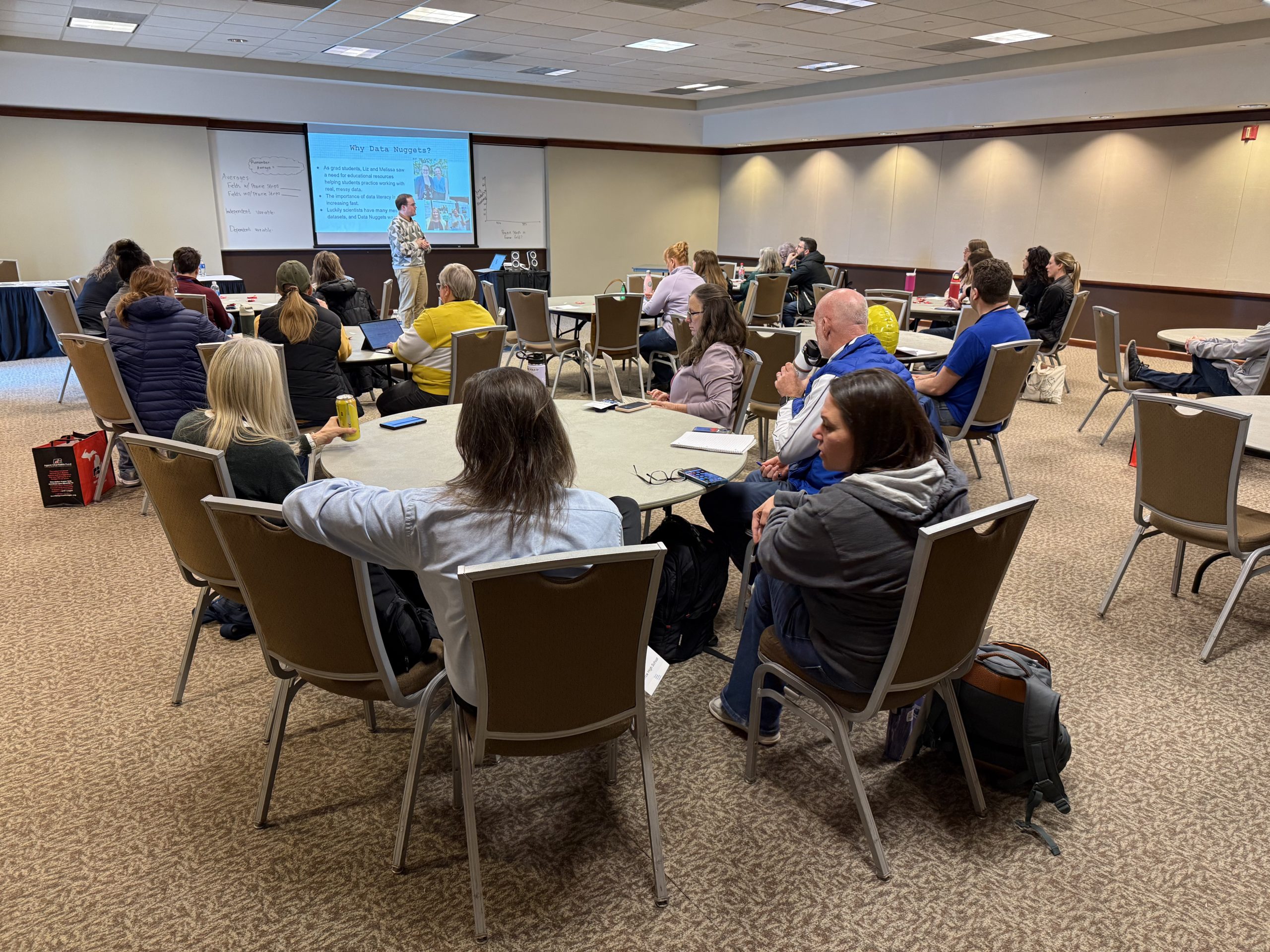
One of the most exciting parts of the fellowship was presenting at the Michigan Science Teachers Association Conference in March. During our session, I spoke with about 25 educators about using Data Nuggets in their classrooms. In the second half of the session, I walked the audience through Little Butterflies on the Prairie, a new Data Nugget based on my lab’s research that had just launched in January. It was amazing to hear directly from teachers about their classroom experiences, how they planned to adapt these lessons for their students, and what resources they’d like to see next. 

Sam presenting Data Nuggets to a room of teachers at MSTA 2025.
Sam presenting Data Nuggets to a room of teachers at MSTA 2025. Photo by E. Schultheis.

I also revived the monthly Data Nuggets newsletter where I highlighted new activities, teacher resources, and the upcoming outreach events. For the February newsletter, I interviewed and wrote a blog post highlighting KBS Post doc Dr. Rosemary Martin to share with teachers how science doesn’t stop in the winter.  

Finally, I was able to help with Data Nugget’s recent effort in highlighting the scientists behind the science. A handful of lessons now include scientist profiles, allowing students to learn not just about the research, but about the people and stories behind it. 

Why Data Nuggets is important

The need for data literacy is quickly rising. However, many classrooms today do not incorporate real data in their lessons. Real data is messy! Data Nuggets are a perfect solution! They get students thinking about the current problems around them, as we have DNs written by people all over the U.S. and world! They get students engaged in real scientific research and the scientists’ creative solutions, and they also get students practicing with authentic data, complete with those dreaded decimals! 

Why outreach matters 

As first year grad student, this fellowship reminded me that research doesn’t end when a paper is published. The next step is sharing that knowledge in ways that matter, like with the next generation of scientists. 

It has been my goal after graduate school to be a bridge between researchers and educators. Whether that be with an open-source program for teachers or by returning to the classroom myself, I hope to continue to share Data Nuggets resources.  

I am thrilled to be able to work with Data Nuggets and I look forward to the continued connection in many semesters, and years, to follow. 

Data Nuggets awarded the Huxley from the Society for the Study of Evolution

The SSE T. H. Huxley Award Committee has announced the winner of the 2025 T. H. Huxley Award, Dr. Elizabeth Schultheis, Education and Outreach Coordinator for the Kellogg Biological Station Long-Term Ecological Research Program at Michigan State University, for her collection of educational resources called “Data Nuggets”. Data Nuggets, which are developed in collaboration with Dr. Melissa Kjelvik, bring real data and scientific role models into the classroom to build quantitative and critical thinking skills.

As part of the award, Dr. Schultheis will receive funding to present her work at the National Association of Biology Teachers (NABT) conference in October. 

The T. H. Huxley Award is administered by the T. H. Huxley Award Committee, a subset of the SSE Education and Outreach Committee.