What wakes the squirrels?

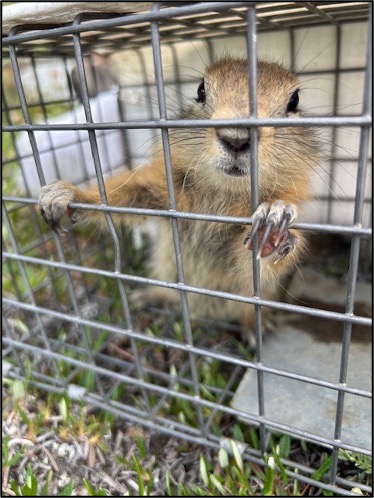
An arctic ground squirrel checking out the scientists from inside a trap
An arctic ground squirrel checking out the scientists from inside a trap. Photo by Rachel Rigenhagen.

The activities are as follows:

The Arctic is home to a unique biome, known as tundra. Found at Earth’s northernmost region, the tundra ecosystem is defined by frozen land. Permafrost is a thick underground layer of organic matter, soil, rock, and ice that has been frozen for at least two full years. Each summer as the temperature warms, a thin upper layer of frozen soil thaws, refreezing again the following winter.

Although the tundra might be far away from where most people live, it is connected to the entire globe through the atmosphere. This means it is affected by climate change, just like other places on Earth. In the tundra, increasing temperatures are causing snow to melt and the top layer of permafrost to thaw earlier each year.

Arctic ground squirrels, also called siksik (pronounced shrick-shrick) in the Inuktitut language, are an important mammal species that call the tundra home. They hibernate for roughly eight months – the longest of any mammal in the world. As they hibernate, the snow and frozen permafrost insulate their burrows and protect them from severe cold. As the summer months approach, the squirrels emerge and move above ground. Their mating season begins immediately after hibernation ends. With only four months out of their burrows, they have to maximize their time! 

Cory is a scientist who lives in Colorado but travels to the Arctic to do research at Toolik Field Station. For over 25 years, Cory and his research team have been studying the ground squirrel populations. While at Toolik recently, Cory was surprised to discover that male and female ground squirrels were emerging from hibernation on different schedules. He is worried these mismatches could be due to climate change. 
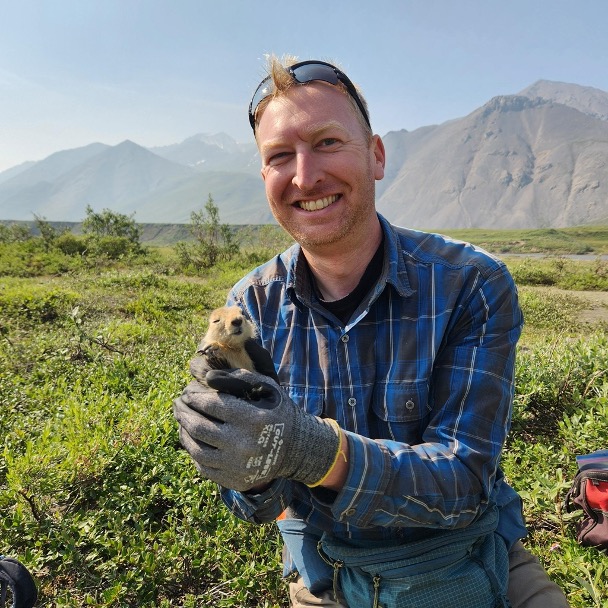
Austin holding an arctic ground squirrel that has been tagged in front of an Arctic scene background.
Austin, a PhD student in Cory’s lab, releases an arctic ground squirrel that has been tagged. Photo by Rachel Rigenhagen.

This made Cory wonder how ground squirrels know when to come out of their burrow. He suspected that ground squirrels use cues from their environment, such as increasing temperatures, permafrost thaw levels, or the length of time they have been in hibernation. Some of these environmental cues, such as the timing of permafrost thawing, are affected by increased temperatures. Other cues are not affected by temperature, such as the length of time squirrels have been hibernating. If males and females are using different cues, this could be why they are coming out at different times.

To investigate his idea, Cory and his research team turned to data they have been collecting over time. Each year, the research team temporarily captures squirrels. They record each squirrel’s sex, give them a unique ID, and put collars on them before releasing them. The collars can detect light, which is used to know when the squirrels are above ground. For each squirrel, the team records the first date that light was detected after hibernation, called the emergence date. Cory used Julian dates, which start with January 1 as Day 1 and continue to count up by one for each day. 

Cory also looked at the data on snowmelt as a potential environmental cue that the squirrels were using. Each year Cory’s team installs cameras on tall towers so that they can use images to measure daily snow cover. When no snow was detected, they measured this as the snowmelt date. Using these two sources of data, they can look for any patterns in emergence dates and spring snow melt. 

Featured scientist: Cory Williams (he/him) from Colorado State University and Toolik Field Station. Written by Claire Gunder (she/they) and Rachel Rigenhagen (she/her), Avalon School, St. Paul, Minnesota.
Flesch–Kincaid Reading Grade Level = 8.7

Springing forward

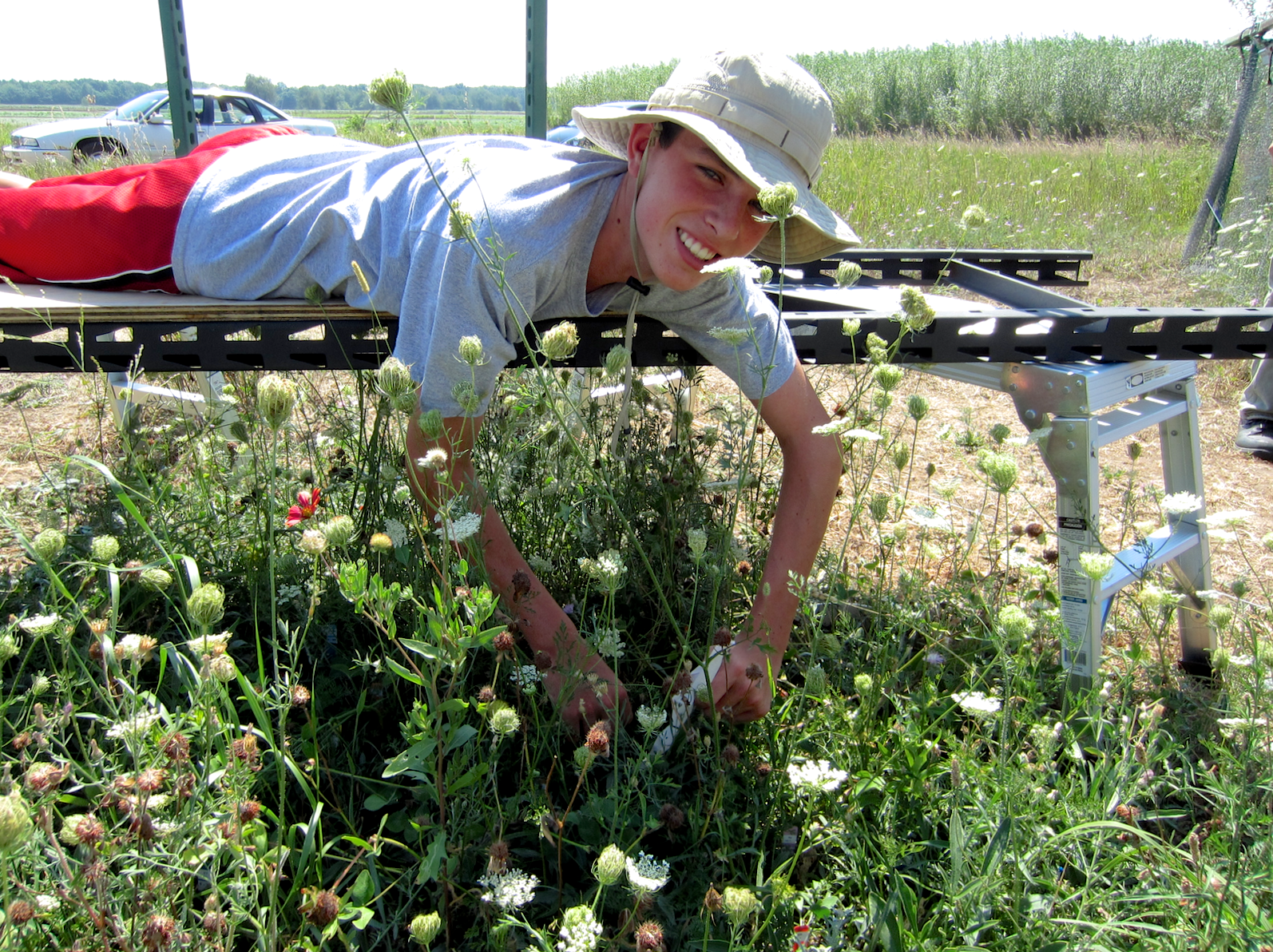
Scientist Shaun collecting phenology data in the climate change experiment. He is recording the date that the first flowers emerge for dame’s rocket.

Sean Mooney, a high school researcher, collecting phenology data in the climate change experiment. He is recording the date that the first flowers emerge for dame’s rocket.

The Reading Level 1 activities are as follows:

The Reading Level 3 activities are as follows:

Éste Data Nugget también está disponible en Español:

Every day we add more greenhouse gases to our air when we burn fossil fuels like oil, coal, and natural gas. Greenhouse gasses trap the sun’s heat, so as we add more the Earth is heating up! What does climate change mean for the species on our planet? The timing of life cycle events for plants and animals, like flowering and migration, is largely determined by cues organisms take from the environment. The timing of these events is called phenology. Scientists studying phenology are interested in how climate change will influence different species. For example, with warming temperatures and more unpredictable transitions between seasons, what can we expect to happen to the migration timings of birds, mating seasons for animals, or flowering times of plants?

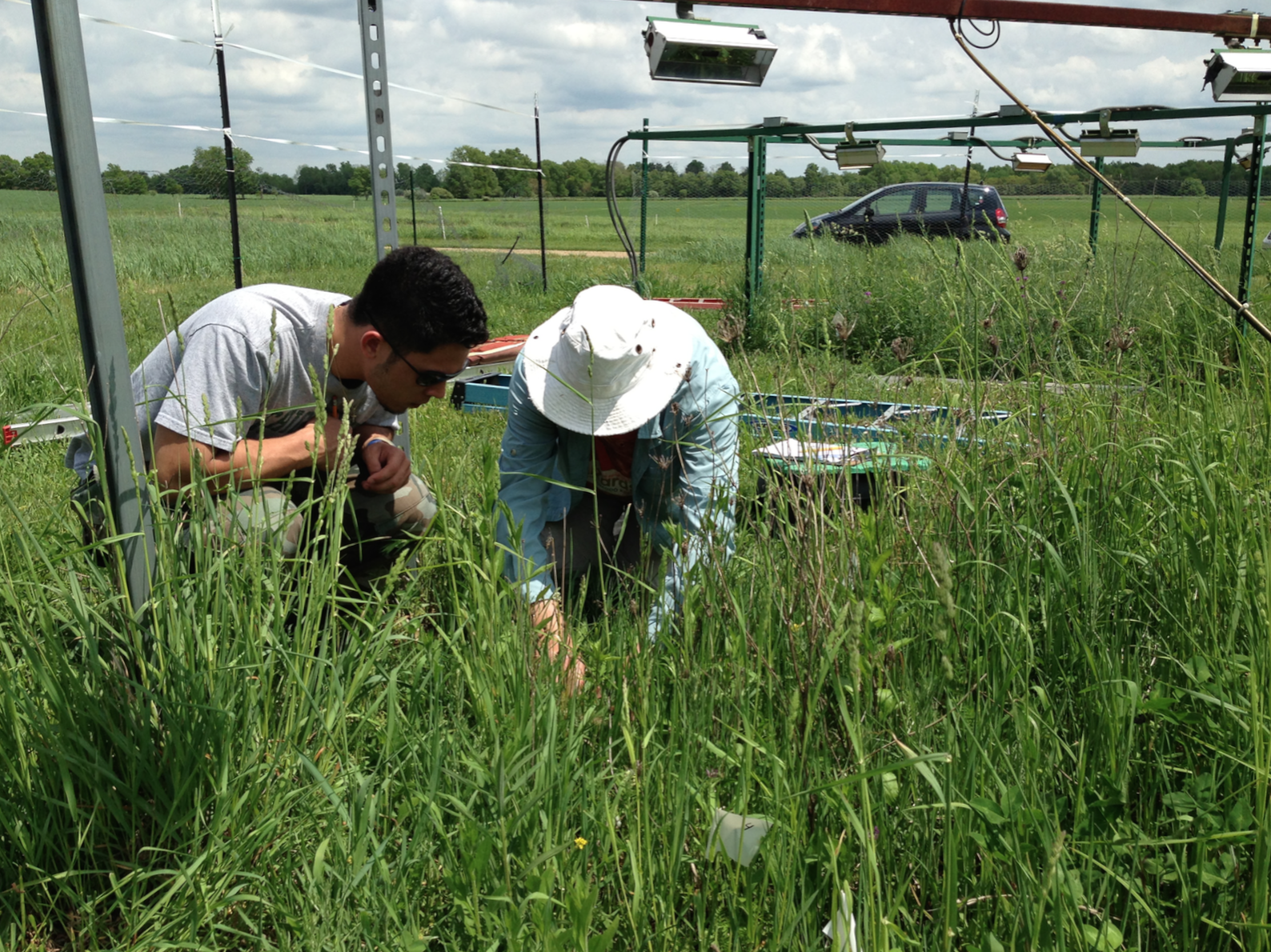
Scientists collecting phenology data in the climate change experiment. They are recording the date that the first flowers emerge for dame’s rocket.

Scientists collecting phenology data in the climate change experiment.

Plants are the foundation for almost all life on Earth. Through photosynthesis, plants produce the oxygen (O2) that we breathe, food for their own growth and development, food for animals and microbes, and crops that provide food and materials for human society. Because plants are so important to life, we need to find out how climate change could affect them. One good place to start is by looking at flowering plants, guided by the question, how will increased temperatures affect the phenology of flowering? One possible answer to this question is that the date that flowers first emerge for a species is driven by temperature. If this relationship is real, we would expect flowers to emerge earlier each year as temperatures increase due to climate change. But if flowers come out earlier and earlier each year, this could greatly impact plant reproduction and could cause problems for pollinators who count on plants flowering at the same time the pollinators need the pollen for food.

Shaun, Mark, Elizabeth, and Jen are scientists in Michigan who wanted to know if higher temperatures would lead to earlier flowering dates for plants. They chose to look at flowers of dame’s rocket, a leafy plant that is related to the plants we use to make mustard! Mark planted dame’s rocket in eight plots of land. Plots were randomly assigned to one of two treatments. Half of the plots were left to experience normal temperatures (normal), while the other four received a heating treatment to simulate climate change (heated). Air temperatures in heated plots increased by 3°C, which mimics climate change projections for what Michigan will experience by the end of the century. Mark, Elizabeth, and Jen measured the date that each plant produced its first flower, and the survival of each plant. The scientists predicted that dame’s rocket growing in the heated plots would flower earlier than those in the normal plots.

 Featured scientists: Shaun Davis from Thornapple Kellogg Middle School and Mark Hammond, Elizabeth Schultheis, and Jen Lau from Michigan State University

Flesch–Kincaid Reading Grade Level = The Reading Level 3 activity has a score of 9.2; the Level 1 has a 6.4.

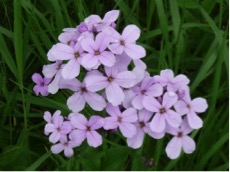
Flowers of Hesperis matronalis (dame’s rocket), a species of mustard that was introduced to the U.S. from Eurasia.

Flowers of Hesperis matronalis (dame’s rocket), a species of mustard that was introduced to the U.S. from Eurasia.

Additional teacher resources related to this Data Nugget include:

  • If you would like your students to interact with the raw data, we have attached the original data here. The file also includes weather data over the course of the experiment if students want to ask and explore independent questions.

SaveSave

SaveSave

SaveSave

SaveSave

SaveSave

SaveSave

SaveSave

SaveSave

SaveSave

SaveSave

SaveSave