The chromosome advantage

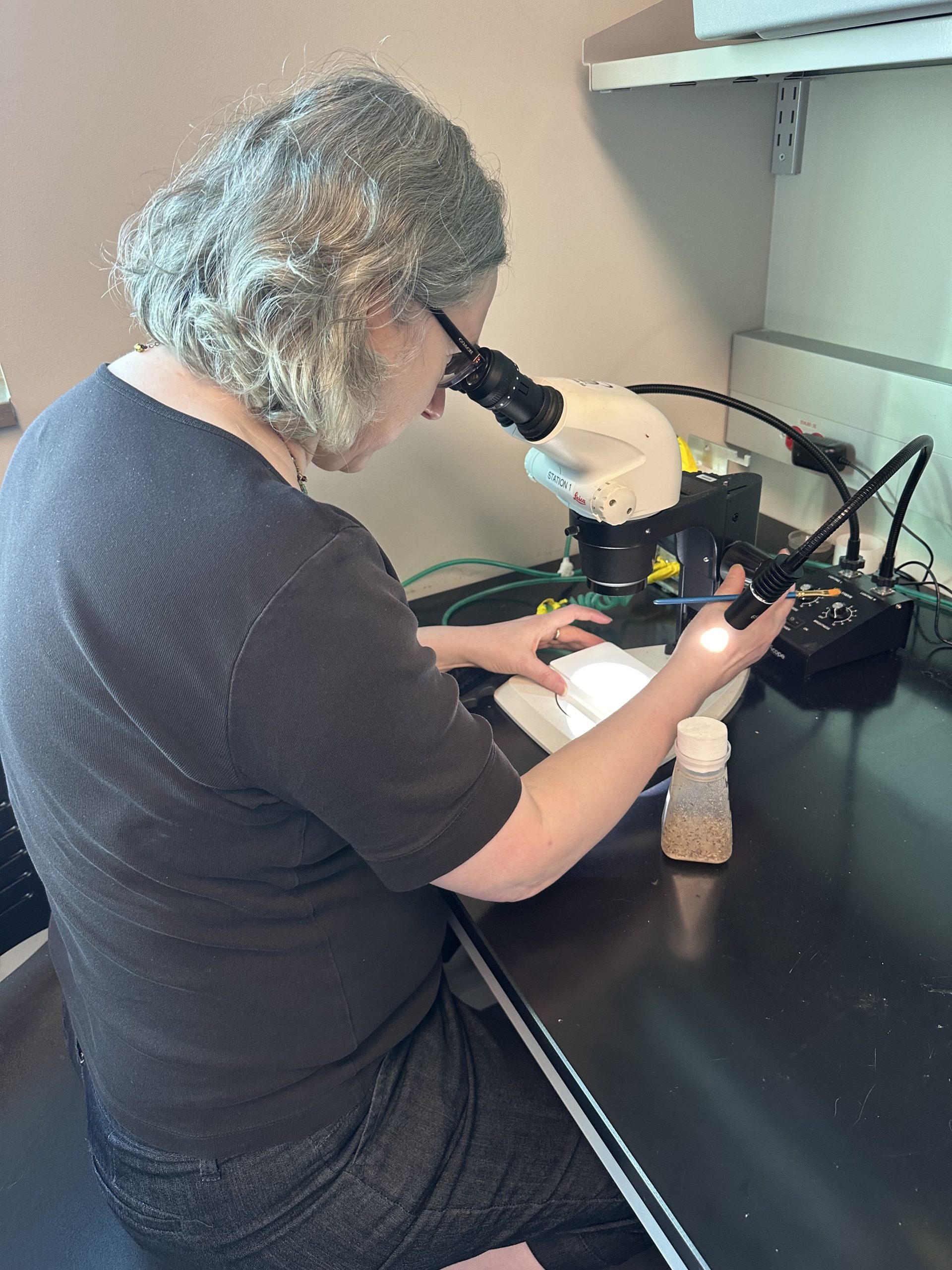
Nicole Riddle looking at fruit flies under the microscope

The activities are as follows:

Many factors affect lifespan, or how long an organism lives. Different species, and individuals within a species, will all live to different ages. Across species, things like body size, rate of metabolism, and genetics can all come into play. For example, larger animals tend to live longer than smaller organisms. Within a species, genetics and environmental conditions, such as being able to find food, the presence of predators, and disease, will also impact survival.

Scientists have also noticed that in many animal species, one sex tends to live longer than the other. Sometimes it is the males, and sometimes it is the females. Why might this be? To better understand aging differences across sexes, a group of scientists decided to work together. Each scientist studies a different species, so by combining their knowledge, they can look for patterns and see if there are consistent factors that are the cause.
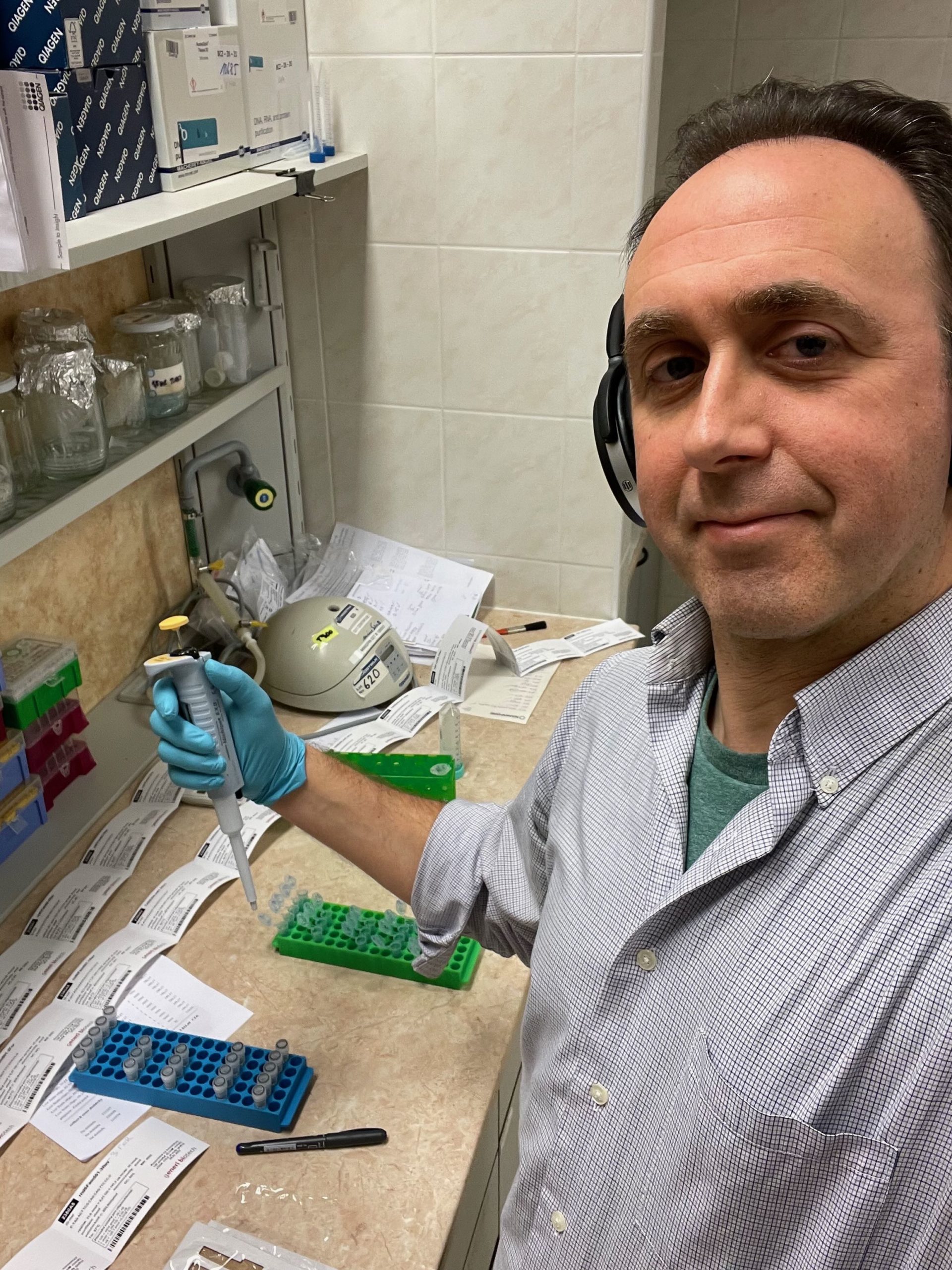
Jamie Walters running DNA extractions in the lab.

Nicole and Jamie are two scientists in this group. Nicole studies fruit flies, while Jamie studies moths and butterflies. Even though fruit flies and moths are both insects, sex is determined differently. In most animals, biological sex is determined by specific chromosomes. These structures are inside cells and carry genetic information. Individuals usually have two sex chromosomes. Whether those two chromosomes are the same or different often determines whether their bodies develop as male or female.

In fruit flies, females have two of the same sex chromosomes (XX), while males have two different sex chromosomes (XY). In moths and butterflies, the pattern is reversed. Males have two of the same sex chromosomes (ZZ), while females have two different ones (ZW).

Nicole and Jamie wondered if having two different sex chromosomes might affect lifespan. When an individual has only one copy of a particular chromosome—like the X in XY males or the Z in ZW females—there is no second copy for the genes on that chromosome. If that single copy contains a harmful mutation or becomes damaged, the organism cannot rely on a second copy to make up for it. On the other hand, individuals with two of the same sex chromosomes (XX or ZZ) have a kind of “genetic backup”. This extra protection might reduce the risk of problems that could lead to an earlier death.

To test their idea about sex chromosomes and lifespan, Nicole and Jamie designed an experiment called a survival assay. A survival assay is a laboratory experiment in which scientists carefully track how long organisms live under controlled conditions. By keeping the environment consistent, scientists can focus on the specific factor they want to study.

Nicole works with fruit flies (left) and Jamie studies pantry moths (right). 
 
Plodia interpunctella female by Pekka Malinen, Luomus is licensed under CC BY-SA 4.0.

Nicole performed her survival assay with the fruit fly species, Drosophila melanogaster. Jamie worked with a pantry moth species called Plodia interpunctella. Both scientists already raise these species in their labs and carefully document the life cycles and age of each individual.

To set up their assays, Nicole and Jamie chose individuals that had emerged from the pupae stage around the same time. This step was important because they wanted to make sure all individuals had the same starting point. If some individuals had emerged a lot sooner, the results would not be accurate.

Nicole collected 100 female and 100 male fruit flies, and Jamie collected 60 male and 60 female moths. The insects were given plenty of food and kept in good environmental conditions, such as appropriate temperature and humidity. By reducing stress, they could better observe natural lifespan differences between males and females, rather than differences caused by harsh conditions.

Each day, Nicole and Jamie recorded how many males and females were still alive. This careful daily tracking allowed them to see how survival changed over time. The survival assay continued until the last individual had died. By the end of the experiment, Nicole and Jamie had detailed data showing how long males and females lived in each species. These results would help them test whether having two identical sex chromosomes—or two different ones—might influence lifespan.

Featured scientists: Nicole Riddle (she/her) from the University of Alabama at Birmingham and Jamie Walters (he/him) from the University of Kansas.

Flesch–Kincaid Reading Grade Level = 9.9

Additional Teacher Resources:

  • Scientist profiles: Nicole Riddle and Jamie Walters both have scientist profiles to supplement this activity. Have students read more about their research, personal lives, and advice they have as a way to share contemporary scientist role models with students!
  • You can learn more about the IISAGE (Integration Initiative: Sex, Aging, Genomics, and Evolution) project here. This initiative is a collaborative effort to learn more about the mechanisms of sex-specific differences in aging and features research with a variety of organisms.
  • Visit this page for additional scientist profiles and Data Nuggets featuring IISAGE research.
Bear Necessities: A genetic panel for bear identification

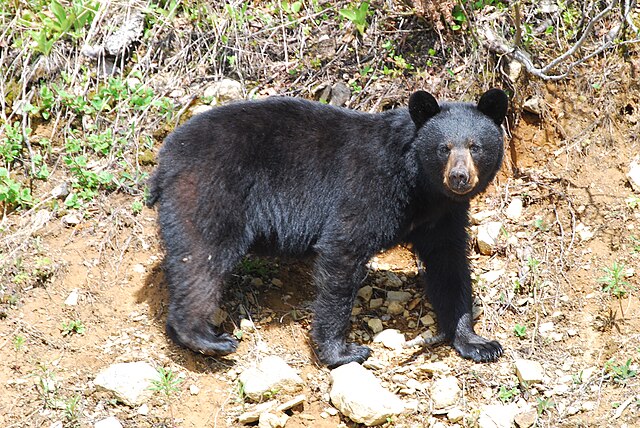
Baby black bear, Murray.

The activities are as follows:

North Carolina is home to many black bears. As human development expands into bear habitats, conflicts between people and bears are becoming more common. In these situations, identifying individual bears and understanding their origins is essential. This ensures that wildlife officials can correctly manage aggressive or relocated bears. It also allows for better tracking of bear populations and their movements across the state, helping to inform long-term conservation approaches.

Though each individual bear has its own genotype, or unique genetic makeup, individuals within the same population often share more DNA with each other than with members of other populations. A group of scientists started comparing the DNA of black bears in California and identified 11 unique regions, called loci, in the DNA of bears from different populations. This set of loci that the scientists can use to assign individual black bears to different populations is called Ursaplex.

Each loci have microsatellites, which are repetitive sequences of nucleotide bases that vary between individuals or populations. Different versions of the microsatellite loci are called alleles. By examining these patterns in a bear’s genotype, scientists can identify bears at an individual level and tell which population they are from.

Isabella is a wildlife geneticist who studies how we can use genetic tools to conserve wild animal populations. She has always been passionate about animals and conservation. Isabella, along with other scientists, wants to test whether or not the Ursaplex panel could work for black bears in North Carolina.

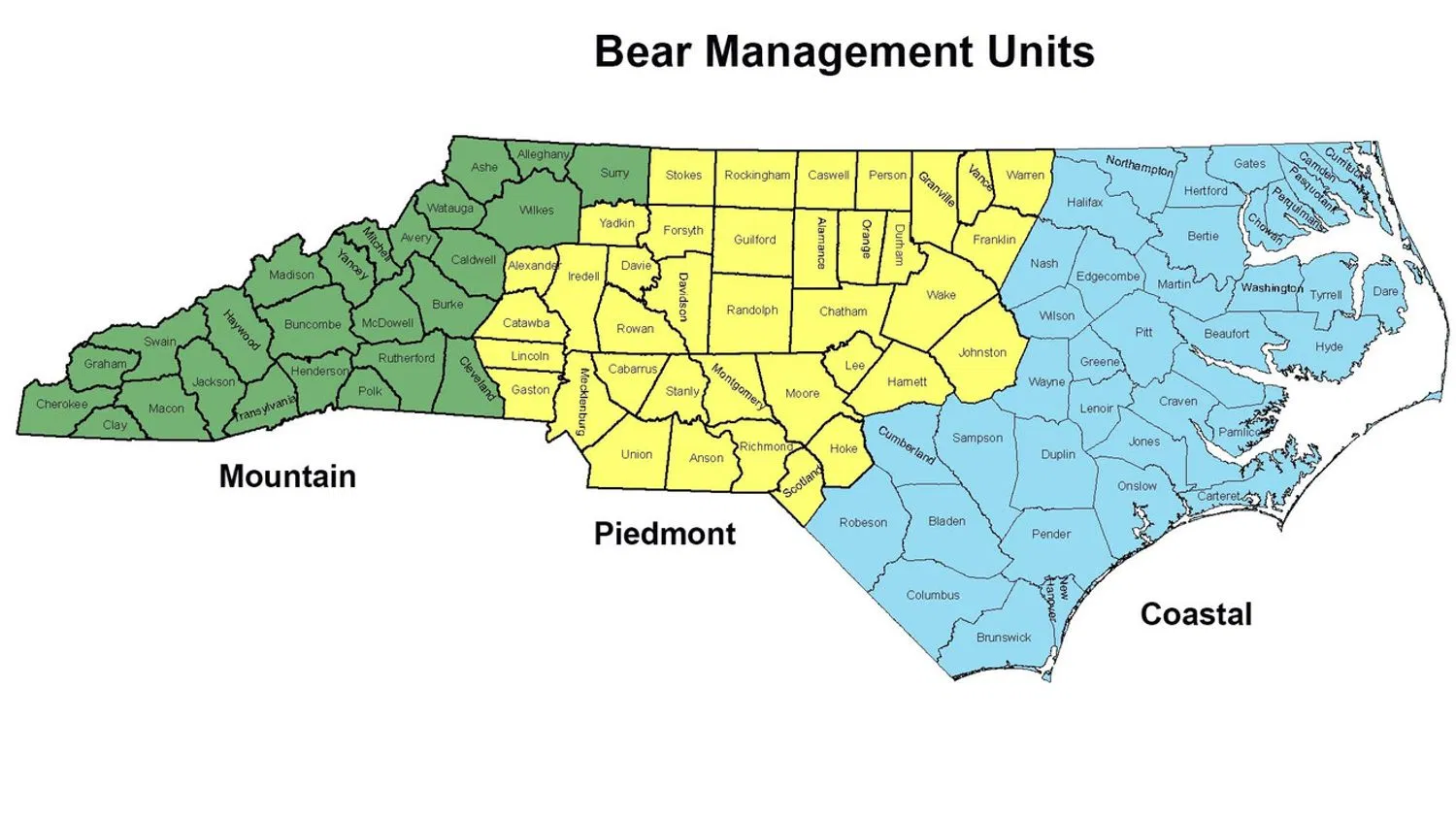
North Carolina bears are split into three different management groups based on where they are found: Mountain, Piedmont, and Coastal. Isabella wanted to know whether black bears show genetic differences based on which management group they live in. If so, she wanted to see if any of the microsatellites in the Ursaplex panel could be used to identify which management group a bear is from.

Isabella obtained blood or saliva samplesfor350black bears from collaborators at the Wildlife Resource Commission, the state agency for wildlife management. The samples came from bears in the Mountain and Coastal management groups. The Piedmont bear population is significantly smaller and elusive, so samples from Piedmont bears were not available. She extracted the DNA from the samples and found the genetic sequence at each of the 11 loci in Ursaplex. Isabella looked at then umber of nucleotide base repeats in each bear’s genetic sequence and used the data to identify any patterns based on where the bear was from. Each of the 11 loci included arebi-allelic, meaning each bear will have two copies of the locus (one from their mom and one from their dad). Recently, Isabella received a blood sample from a new baby bear, Murray, who was rescued by wildlife managers. This baby bear was alone when he was found, so we don’t know where in the state he came from. He was found in the Eastern part of the state, so Isabella thought that his parents were likely both Coastal management group bears.

Featured scientists: Isabella Livingston (she/her) from North Carolina State University Written with Kate Price

Flesch–Kincaid Reading Grade Level = 9.6

Guppies on the move

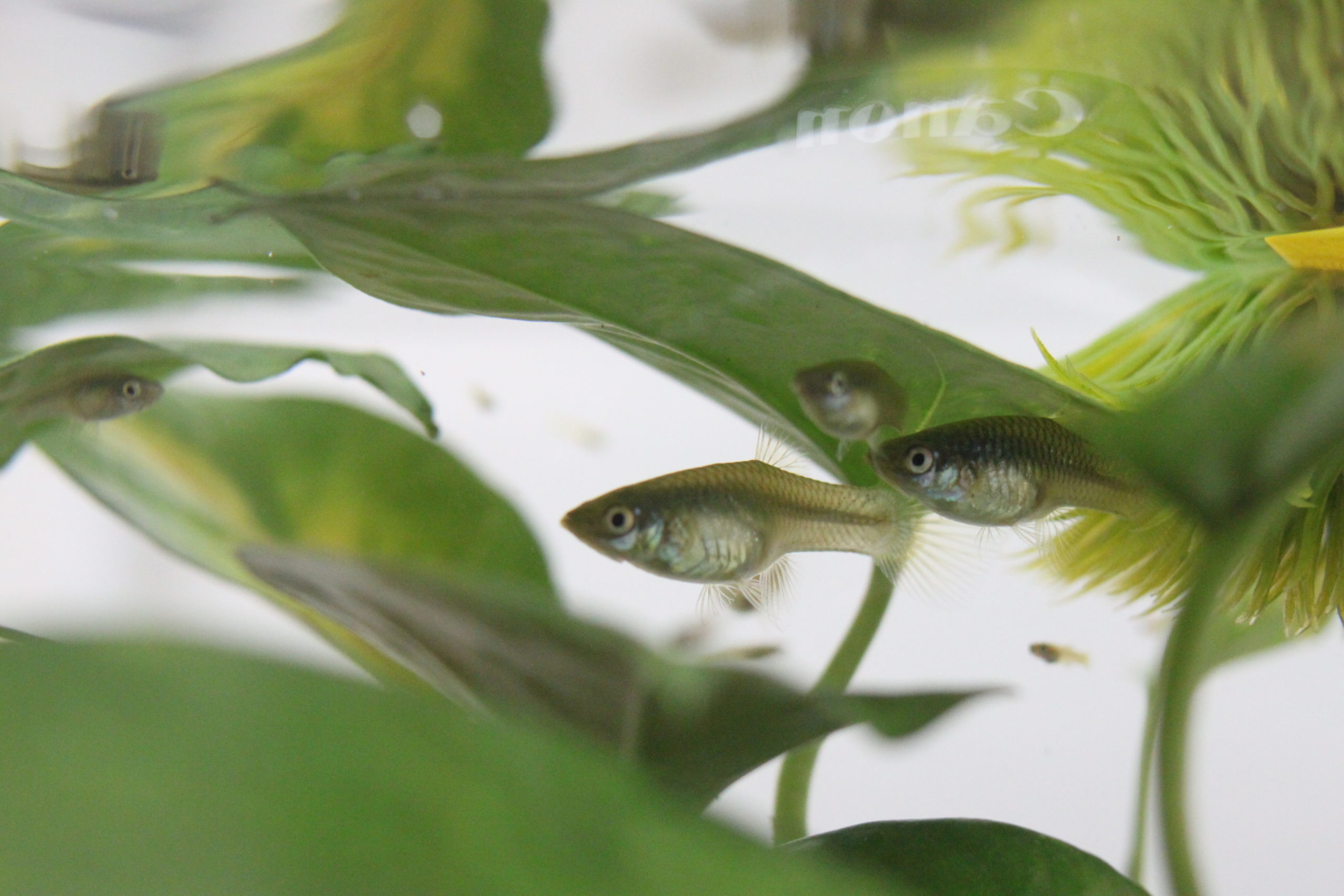
Guppies in the lab. Photo Credit: Eva Fischer.

The activities are as follows:

Animal parents often choose where to have their offspring in the place that will give them the best chance at success. They look for places that have plentiful food, low risk of predation, and good climate.

Even though parents pick out these spots, individuals often move away from their birthplace at some point in their lives. Why do animals move away? There are risks that come with moving from one place to another. It can be dangerous to go through unknown places – potentially stumbling into predators or being exposed to diseases. But there can also be benefits to moving, such as discovering a better spot to live as an adult, finding mates, and spreading out to reduce competition.

As someone who loves to travel and has lived in four different countries, Isabela can relate! Isabela likes to see new places, try new foods, and learn new languages. But there can be drawbacks, and occasionally she finds it hard to be in a completely new place. Sometimes people don’t understand her accent, or she can’t understand them. She also misses her family when she is away. Knowing that traveling and moving can have such highs and lows for herself, Isabela wanted to know more about what motivates animals to seek out new places.

To follow her curiosity, Isabela found a graduate advisor who was also interested in animal movement. She joined Sarah’s lab because she had already collected data on the movement of small tropical fish called guppies. Sarah is part of a large collaborative project, where researchers from all over the world come together in Trinidad to study these fish populations.

When Sarah first started collecting data in this system, she wanted to track how far guppies move from one place to the next. She used established protocols from previous work in this system to set up a study. With the help of a team, she captured every fish in two similar streams for replication. Every fish that was caught was marked with a small tattoo so the research team could recognize it if it was found again in the future. She did this same procedure every month for 14 months. Each time she sampled the fish, she recorded the individuals that she found and where they were found.

Isabela used this dataset to ask whether guppies benefit from moving from one place to another. In this study, she focused on one type of benefit: having a higher number of offspring. It is through reproduction that animals are able to pass on their genes, so the more offspring an individual fish has, the more successful it is.

First, Isabela used the existing dataset to find out how far each fish moved: if Fish 1 was captured in Portion A of a stream in February and then in Portion B of the same stream in March, Isabela knew it had to move from A to B. She could use the timepoints to estimate how far each individual had traveled that month.

Second, Isabela used genetics to find out how many offspring each fish had. She looked at genetic markers to determine familial relationships between individuals in each stream. For example, two fish that shared 50% of their genes were probably a parent and an offspring. In this case, the older individual would be marked as the parent. Isabela used the genetic information to build a pedigree, or a chart that documents each generation of a population. That way she could track how many offspring each parent had produced.

She used these data to answer her question on whether there are benefits to traveling more. Isabela also wanted to compare whether the potential benefits of dispersal differed across the sexes. Males have to compete for females in order to mate. Isabela wanted to know if males that moved more were able to mate with more females and have more offspring.

Featured scientists: Isabela Borges (she/her) and Sarah Fitzpatrick (she/her) from the Kellogg Biological Station at Michigan State University.

Flesch–Kincaid Reading Grade Level = 8.3

Additional teacher resources related to this Data Nugget include:

If you or your students are interested in accessing more of the data behind this Data Nugget, you can download the full dataset from Isabella’s research and have students create graphs in Excel, Google Sheets, or using other data visualization software.

If students would like to learn more about Isabela, check out this Exploring with Scientists video from her time at the Kellogg Biological Station.

For more on this system and the research Sarah did in this study system, check out this unit and video on Galactic Polymath:

A plant breeder’s quest to improve perennial grain

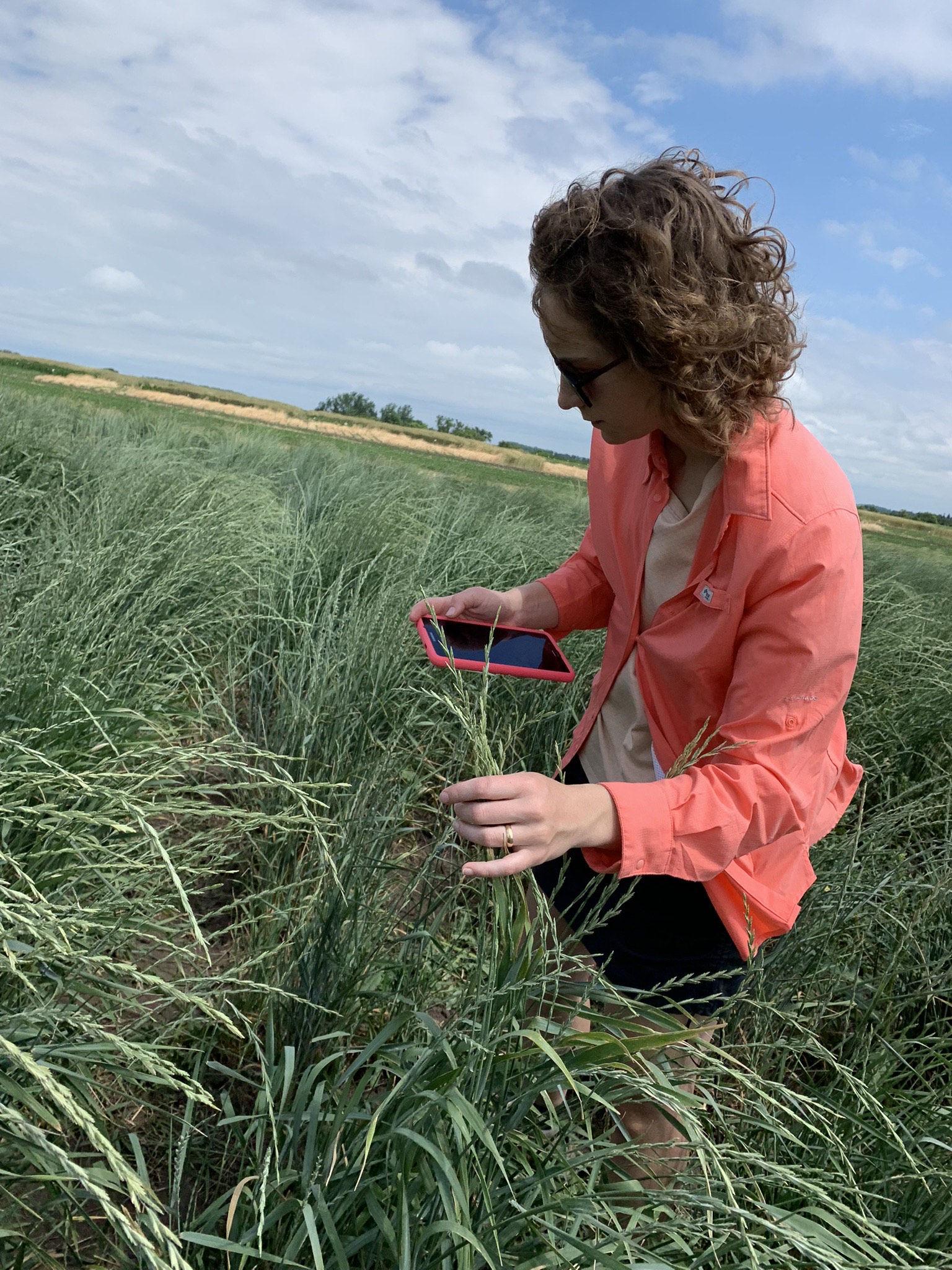
Hannah takes notes on the date of flowering in a Kernza® field in Southwest Minnesota.

The activities are as follows:

Kernza® is a new grain crop that is similar to wheat. It can be ground into flour and used in bread, cookies, crackers and more! Unlike wheat, the rest of the plant can be eaten by livestock such as cattle. Another difference is that Kernza® is a perennial, meaning it grows in the ground for multiple years, whereas annual wheat only grows for one year. However, the challenge is that annual wheat makes more grain and is easier to harvest and sell. This means farmers currently prefer growing annual wheat over Kernza®.

One way to address this mismatch between annual and perennial crops is through selective breeding. This is when humans select individual plants with traits that are desirable for a specific reason. This group of individuals are strategically bred together. The breeder’s goal is to shift the traits over generations. Scientists have only been working on breeding Kernza® for the past few decades; in comparison, humans started selecting annual wheat traits over 10,000 years ago! That is a lot of time to get the traits we are looking for.

Kernza® breeders are working on improving the same traits that have already been improved in annual wheat, including larger seed size. Kernza® scientists follow two main steps to breed plants 1) they select the best individuals from the population and 2) they intercross those individuals to create the next generation, or breeding cycle. With each breeding cycle, plant breeders see a slight improvement in the traits they selected.

Breeders can select plants based on phenotypes, genotypes, or both. Historically, plant breeders have selected based on desired phenotypes, or visible traits, only. Modern plant breeding can take advantage of the fact that we can now look at genotypes, or the genetic makeup, of individual plants quickly and at low costs. Scientists can use this information to make quicker breeding improvements, so we don’t have to wait another 10,000 years for high-yielding Kernza®!

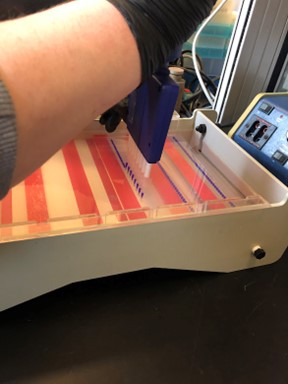
A scientist pipettes DNA samples into an agarose gel to separate samples based on genotype using gel electrophoresis.

Hannah is a scientist currently working on Kernza®. Hannah’s passion for plant breeding was ignited during her high school years. She discovered the captivating world of genetics in her AP Biology class. It was then that she first realized the potential for breeding crop plants to make them more productive and viable for human consumption.

Hannah decided to join other scientists who work on Kernza® at the University of Minnesota. Here, scientists have completed four breeding cycles and are about to start the fifth. Hannah wanted to see whether different genetic makeups (genotypes) lead to differences in seed size (phenotypes). Her goal was to look at each plants’ phenotype and genotype for seed size.

To genotype a plant, scientists collect a small piece of leaf tissue, extract the DNA, and send the DNA to a lab for sequencing. This process tells scientists the genetic makeup that ultimately leads to the traits that we see. Specifically, sequencing data identifies nucleotides, or genetic building blocks of each plant’s DNA. Plants have thousands of genes, which are made up of the DNA nucleotides A, T, C, and G.

Sequencing data can be recorded in several ways. One common way is as SNP data, or Single Nucleotide Polymorphism data. You can think of SNP data as the recipe for proteins. In a SNP dataset, each SNP represents a difference in a nucleotide. Similar to using a different ingredient in a recipe, different nucleotides can result in a different phenotype.

By looking at SNP data, plant breeders can identify differences in genotypes that lead to certain phenotypes. Hannah started by evaluating 1,000 Kernza® plants from the first four breeding cycles. Data on phenotypes had already been recorded for these plants. Hannah then collected SNP data to determine their genotypes as well. She was looking for a pattern between genotypes and phenotypes. If she sees that different genotypes have different phenotypes, scientists can then rely on genotypes to select individuals to breed in future breeding cycles.

Featured scientist: Hannah Stoll (she/her) from the University of Minnesota

Flesch–Kincaid Reading Grade Level = 8.9

Additional teacher resources related to this Data Nugget include: