


The activities are as follows: Male animals spend a lot of time and energy trying to attract females. In some species, males directly fight with other males to become socially dominant. They also fight to take over and control important territories. This process is known as male-male competition. The large antlers of male elk are an
adaptation
Feral chickens fly the coop

The activities are as follows: Teacher Guide Student activity, Graph Type A, Level 3 Student activity, Graph Type B, Level 3 Student activity, Graph Type C, Level 3 Grading Rubric When domesticated animals that humans keep in captivity escape into the wild, we call them feral. You may have seen feral animals, such as pigeons, cats,
How the cricket lost its song, Part II

In Part I you determined that the Kauai flatwing mutation led to a decrease in parasitism rates for male crickets. Today, most of the male crickets on Kauai have evolved flat wings and can no longer produce songs that were previously used to attract female crickets. Without their songs, how do males attract females? The activities are as
The Flight of the Stalk-Eyed Fly
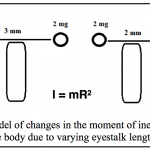
The activities are as follows: Teacher Guide Student Activity, Level 4 Extension – Relay Race Lab Activity Stalk-eyed flies are insects with eyes located on the ends of long projections on the sides of their head, called eyestalks. Male stalk-eyed flies have longer eyestalks than females, and this plays an important role in the flies’ mating patterns.
Data Nugget Workshop at NABT 2015: A Tail of Two Scorpions

You can get the slides from our NABT talk here: A Tail of Two Scorpions
How to escape a predator

The activities are as follows: Teacher Guide Student Activities, Graph Types A-C, Level 3 Grading Rubric, CER Tool, and Other Resources Stalk-eyed flies are insects that have their eyes on the ends of eyestalks, or long projections from the sides of their head. Eyestalks are a sexual signal that males use to attract females. The longer the
Salmon in hot water
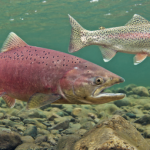
The activities are as follows: Teacher Guide Student activity, Level 4 Grading Rubric Pacific salmon are important members of freshwater and ocean food webs. Salmon transport nutrients from the ocean to freshwater habitats, and traces of these nutrients can be found in everything from trees to bears! Salmon also support sport and commercial fisheries, and are used
How the cricket lost its song, Part I
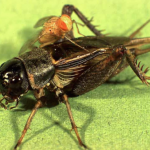
The activities are as follows: Teacher Guide Student activity, Graph Type A, Level 3 Student activity, Graph Type B, Level 3 Student activity, Graph Type C, Level 3 Scientist Profile on Project Biodiversify Grading Rubric Digital Data Nugget on DataClassroom Some of the most vibrant and elaborate traits in the animal kingdom are signals used to attract
Shooting the poop
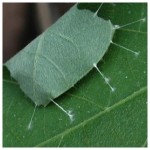
The activities are as follows: Teacher Guide Student activity, Graph Type A, Level 2 Student activity, Graph Type B, Level 2 Student activity, Graph Type C, Level 2 Grading Rubric Imagine walking through a forest in the middle of summer. You can hear birds chirping, a slight breeze rustling the leaves, and a faint pinging noise
Sexy smells

The activities are as follows: Teacher Guide Student activity, Graph Type A, Level 2 Student activity, Graph Type B, Level 2 Student activity, Graph Type C, Level 2 Grading Rubric Digital Data Nugget on DataClassroom Animals collect information about each other and the rest of the world using multiple senses, including sight, sound, and smell. They use