


- Teacher Guide
- Student activity, Graph Type A, Level 2
- Student activity, Graph Type B, Level 2
- Student activity, Graph Type C, Level 2
- Powerpoint of images
- Grading Rubric
When an animal dies, it might seem like the end of its story. But in nature, death can be the beginning of something new. Dead plants and animals slowly break down over time. As they decompose, their matter is recycled back into the ecosystem. Microbes, insects, scavengers, soil, and plants all help break down the remains and use the nutrients.
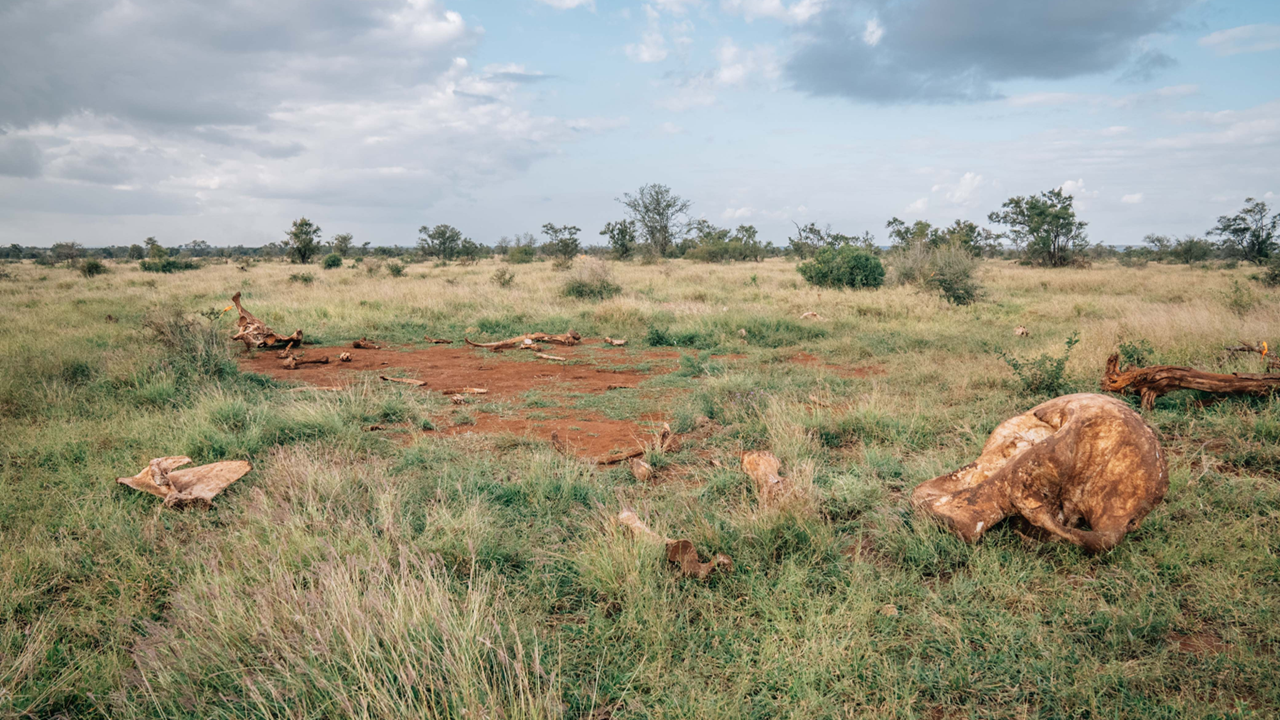
Recycling matter is especially important when the dead animal is as big as an elephant! An African bush elephant can weigh several thousand kilograms. That is bigger than most vehicles. When an elephant dies, its dead body, called a carcass, does not just disappear. Even though scavengers and predators eat a lot of the carcass, they still leave behind pieces that are harder to digest.
For years, Ryan and Ndzalama worked together in Kruger National Park, South Africa. They studied decomposition cycles at sites that had an elephant carcass. They met while studying elephant behavior around carcass sites in the park. Together, they set up cameras and watched as elephants spent time at these sites and noticed how the sites changed over time. They observed that elephant carcasses can change the plant community around it for years. This might be because nutrients from the carcass can move into the soil and eventually become part of new plant growth. Ryan and Ndzalama thought that elephant carcasses could create pulses of intense nutrients that previously limited grass growth at the site. They predicted there would be more grass growing close to the carcass than farther away.
They worked in Kruger, a savanna ecosystem that also has many other large animal species. Plains zebra, African buffalo, blue wildebeest, impala, and white rhinos all live there. These animals, and many others, are grazers, meaning they mostly eat grass. Ryan and Ndzalama realized that to measure grass growth in a place with so many grazers would be difficult. The animals could eat the grass before the researchers can collect data. So, together with an international team, they figured out a way to keep the grazers out.
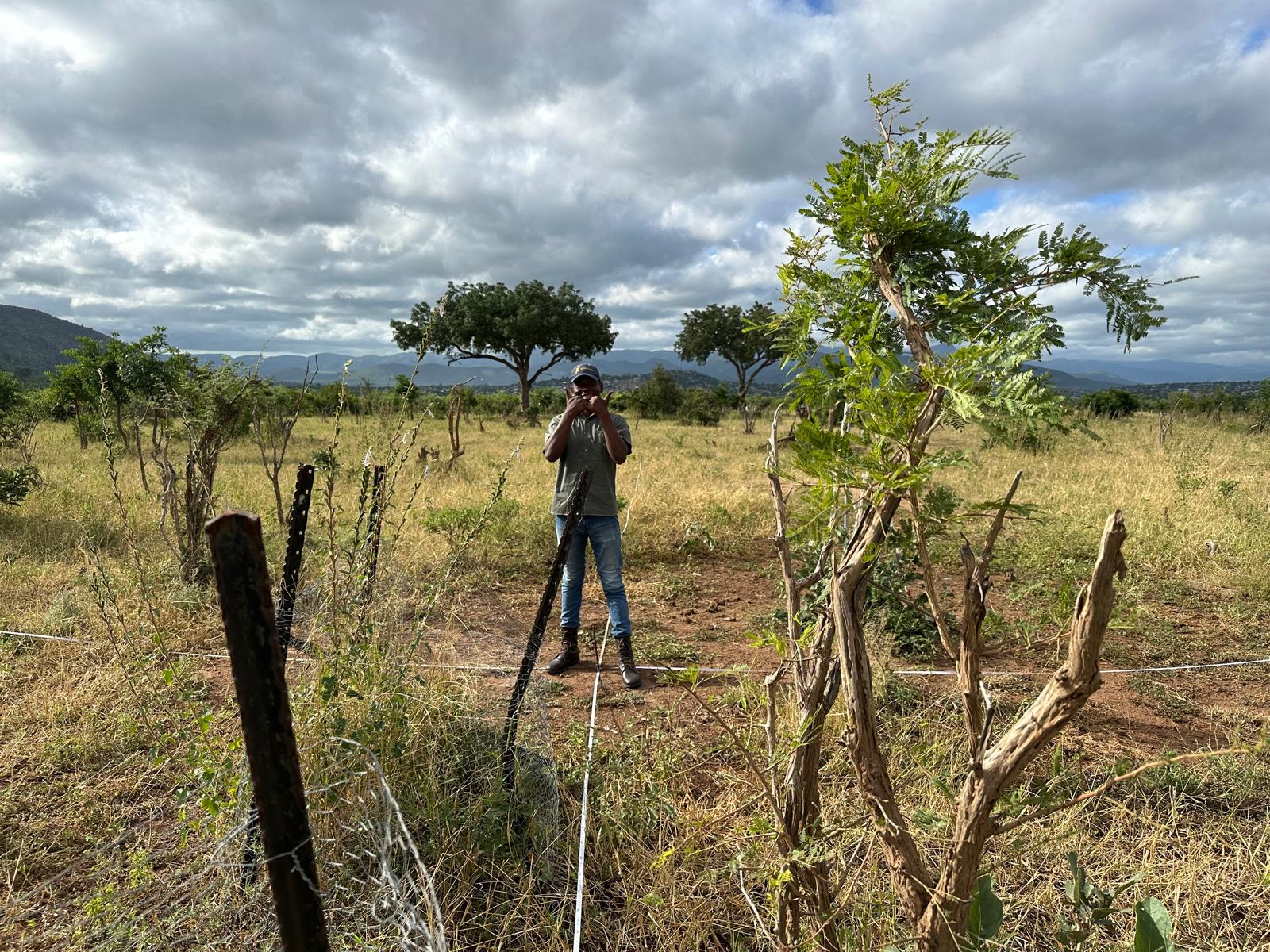
To start, they chose sites throughout the park where an elephant carcass had been decomposing for about 6 months. The carcass had mostly disappeared, and grass had begun to grow around a barren area of soil in the center. At these sites, they built small 1 m² cages called exclosures. An exclosure keeps large grazing animals out, but still lets sunlight and rain reach the grass. They set up exclosures at several distances from the carcass site: 2.5 meters (m), 5 m, 10 m, and 15 m. They also paired an open plot, or control, next to each exclosure where animals could graze normally. For each distance, they set up 14 replicates.
At the start of their study, they clipped all the grass down to the dirt. This way, all plots started with grass at the same height, and they only measured grass that grew during their study. Then, they let the grass grow for a full season. At the end of the growing season, they clipped and weighed the grass from each plot to measure dry biomass, or the mass of dried plant material. For analysis, they averaged the results from the 14 replicates of each treatment and distance.
Featured scientists: Ryan Helcoski (he/him) from Utah State University and Ndzalama Mkansi (he/him) from South African National Parks
Flesch–Kincaid Reading Grade Level = 8.0
Additional Teacher Resources:
A video of Ryan and Kulani in the field. This video introduces the study system and nutrient cycles.