


- Teacher Guide
- Student activity, Graph Type A, Level 3
- Student activity, Graph Type B, Level 3
- Student activity, Graph Type C, Level 3
- Grading Rubric
Aging is a natural process that happens in all living things. As organisms get older, their cells and DNA slowly become damaged. Some of this wear and tear happens naturally as cells do their jobs. Other damage can be brought on by stressful environmental conditions, such as high temperatures.
Richard is a scientist interested in factors that affect aging. He is curious about why some individuals of the same species live longer than others. Similarly, some individuals reach maturity faster, or in other words, have shorter development time. These topics can be tricky to study because lifespan, or how long an organism lives, can take a long time to observe. For this reason, Richard studies aging in flies. Flies are especially useful for questions like these because they are small, easy to raise, and have short life cycles. This allows researchers to study growth, development, and aging in a short amount of time.
To start, Richard, along with members of his lab, wanted to look at how temperature affects development time and lifespan. Every organism has a range of temperatures where it grows and functions best. If the environment is much warmer or colder than that range, it can cause stress. Temperature also affects how quickly many biological processes happen. For example, in warmer temperatures, metabolism, or the process of turning food into energy, usually speeds up. Because of this, young organisms often grow and develop faster in warmer conditions. Faster development and metabolism can cause cell damage to build up more quickly.
Richard’s lab includes scientists at all stages – from undergraduates to graduate students, and researchers who already have advanced degrees. They worked together to investigate how temperature affects the development time and lifespan in a fruit fly species. They knew from previous studies that female fruit flies usually live longer than males. Richard’s lab wanted to build on past work and figure out how temperature affects this pattern.
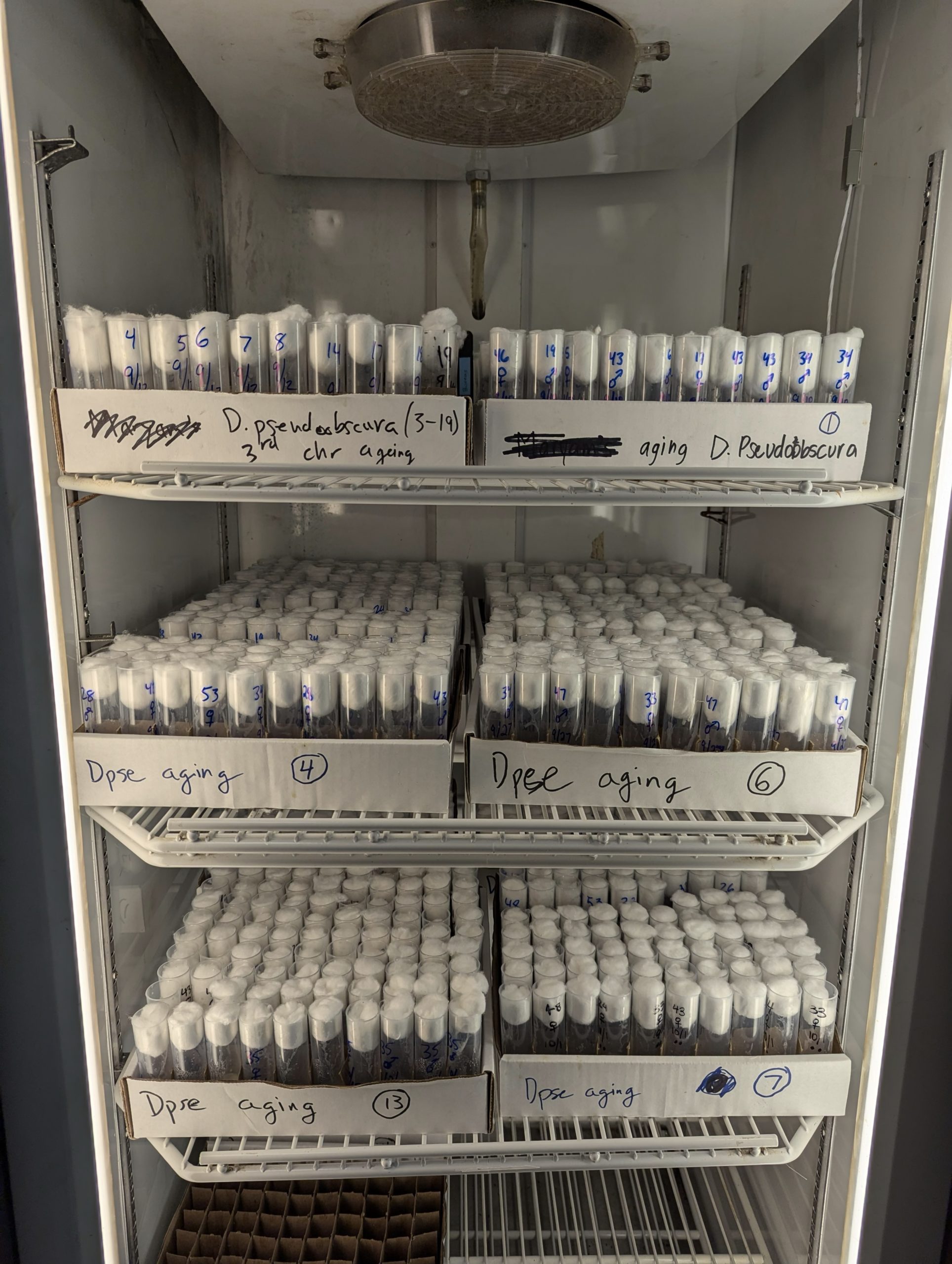
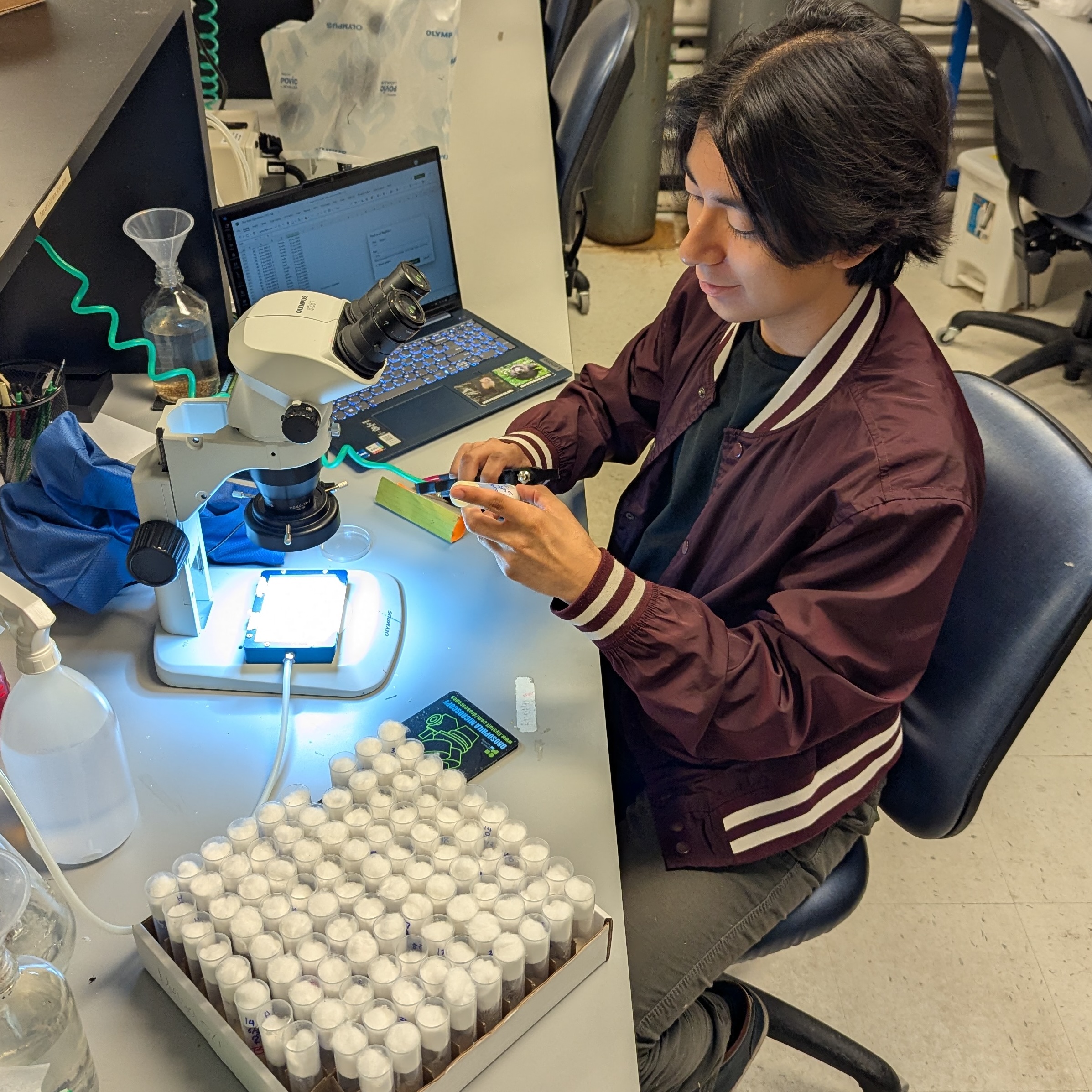
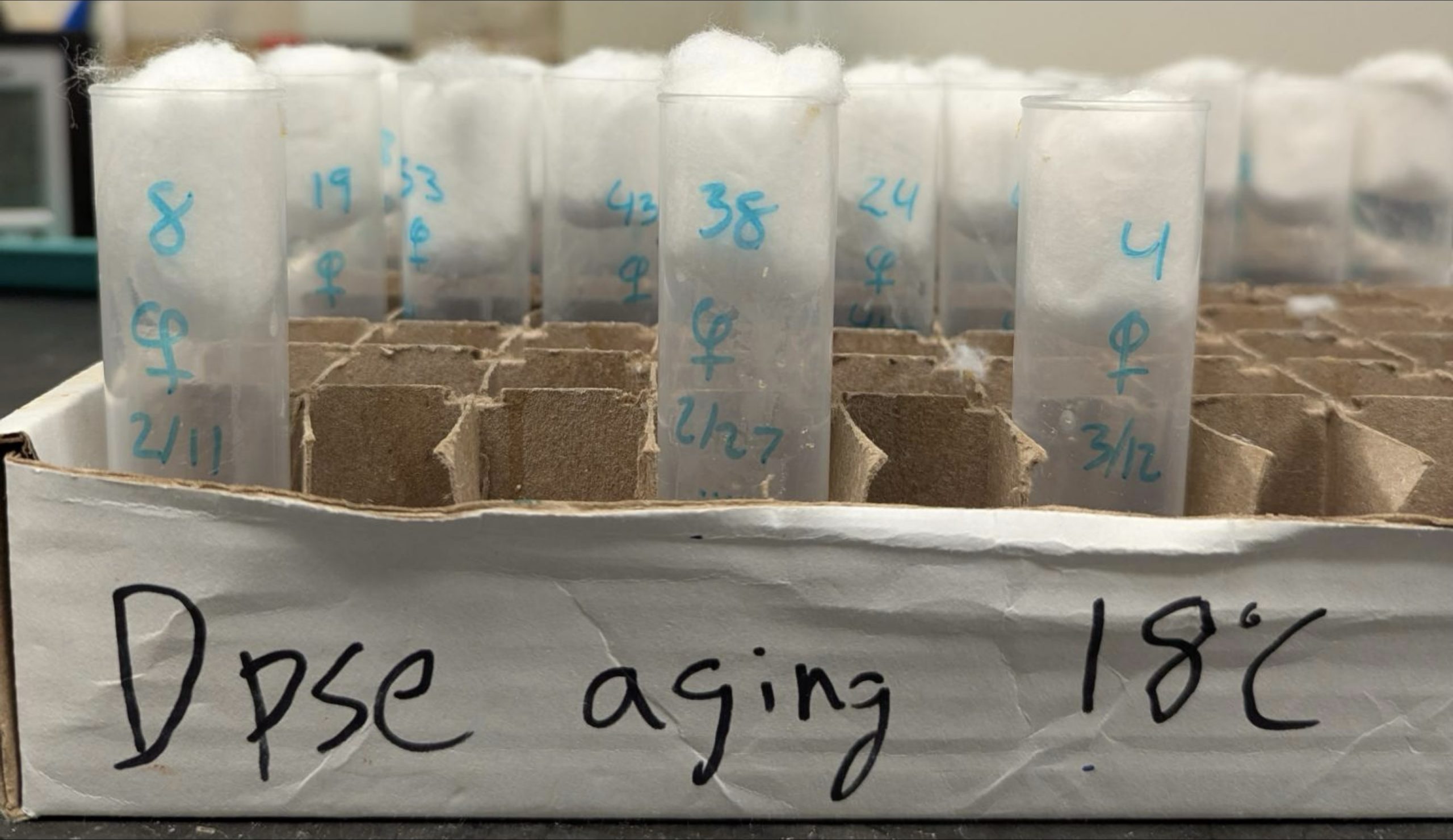
To test the effects of temperature, the research team raised fruit flies in two conditions: 18°C and 22°C. Female flies laid eggs, each in their own container, and the eggs were allowed to develop. Each day, the team recorded when adult flies emerged from their pupal cases and whether they were male or female. Development time was measured as the number of days it took each fly to grow from an egg into an adult.
After the flies emerged, they were moved to a separate container and kept at the same temperature treatment. This ensured the team could keep track of how long each fly lived. The adult flies were all given the same food and kept at the temperatures that they were raised in. Each day, members of the team would carefully check each vial and look for deaths. By knowing the dates that each fly had emerged as an adult and their death date, they could calculate lifespan. Throughout his experiment, the team measured lifespan and development time in thousands of male and female fruit flies!
Featured scientist: The Richard Meisel lab at the University of Houston
Flesch–Kincaid Reading Grade Level = 9.1
Additional Teacher Resources
- Videos to introduce the fruit fly model system: What Fruit Flies Taught Us About Human Biology and The Fly Experiment That Explains Why No Two Animals Match
- A journal article with the full study and results: Reyes Castellon, G.A., et al. 2026. Drosophila pseudoobscura third chromosome inversion arrangements have sex-specific effects on life history traits. bioRxiv, 2026-04.
- Richard is part of a large network of scientists who are studying similar questions about sex-specific differences in aging and longevity. These scientists study organisms ranging from the small fruit flies featured in this activity, to snakes, bats, and mice. Check out more Data Nuggets from IISAGE here.