


- Teacher Guide
- Student activity, Graph Type A, Level 4
- Student activity, Graph Type B, Level 4
- Student activity, Graph Type C, Level 4
- Grading Rubric
Fresh water is one of our most important natural resources and an essential daily need for all people. Ten percent of the world’s freshwater is in Lake Superior. It is the largest lake in the world by surface area. It is also one of the cleanest, clearest, and coldest lakes in the United States.
Watersheds are the network of rivers and streams, called tributaries, that flow into a single point and empty into a larger body of water. The water at the end of a watershed therefore reflects all the changes that happened across a large area. Thousands of tributaries flow through forests, wetlands, and farmland before reaching Lake Superior. These tributaries carry soil, nutrients, and any pollution from the land into the lake.
For a long time, people living near Lake Superior assumed that the tributaries had good water quality, but they didn’t have data to support this. In 2002, some residents living along the lake’s southern shore in Wisconsin came together to monitor the health of local tributaries themselves. They were already hearing how climate change, pollution, and land use were affecting water systems around the world. They formed an organization, now called Superior Rivers Watershed Association (SRWA) to collect long-term data so they could track changes in local tributaries.
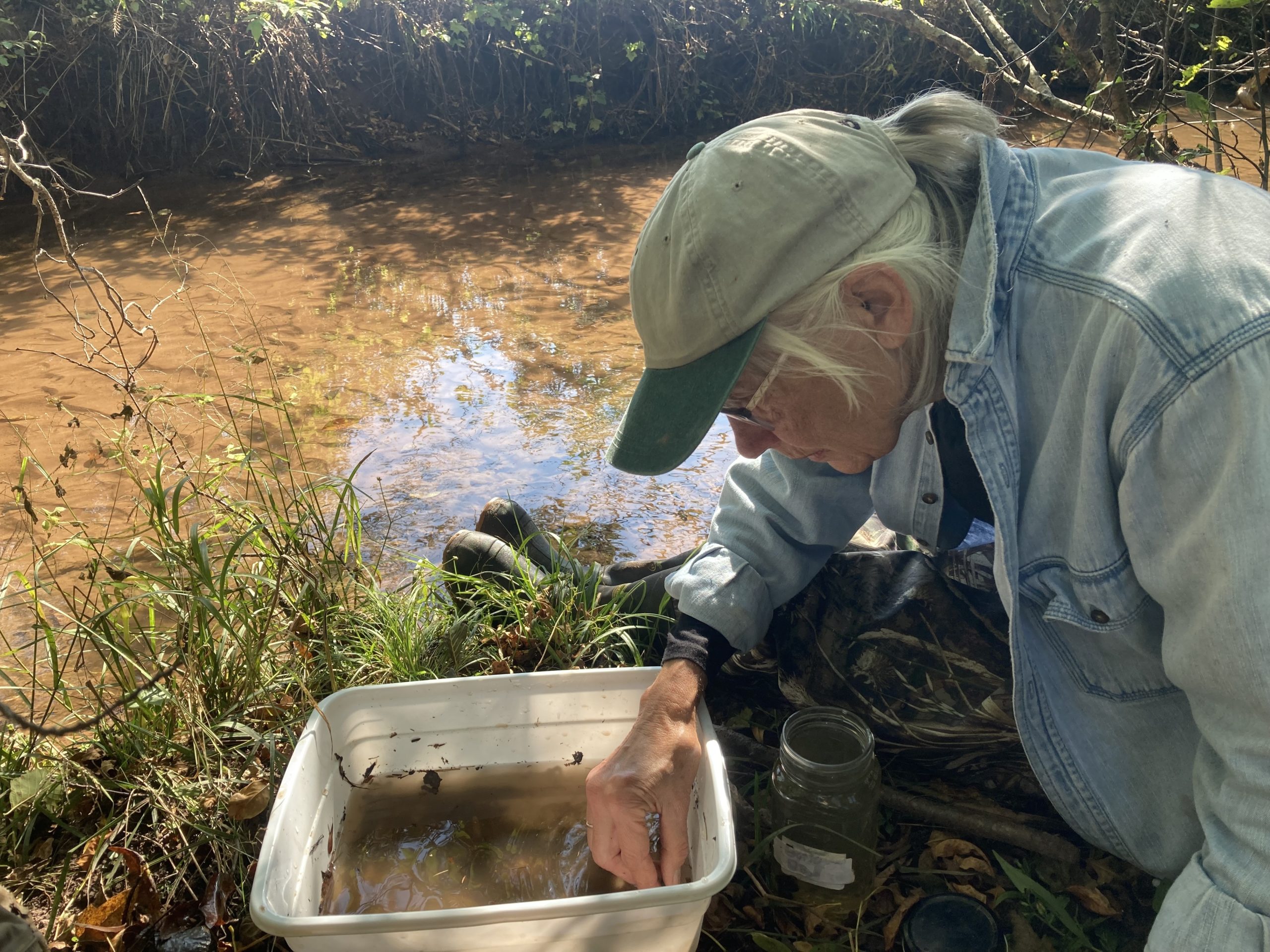
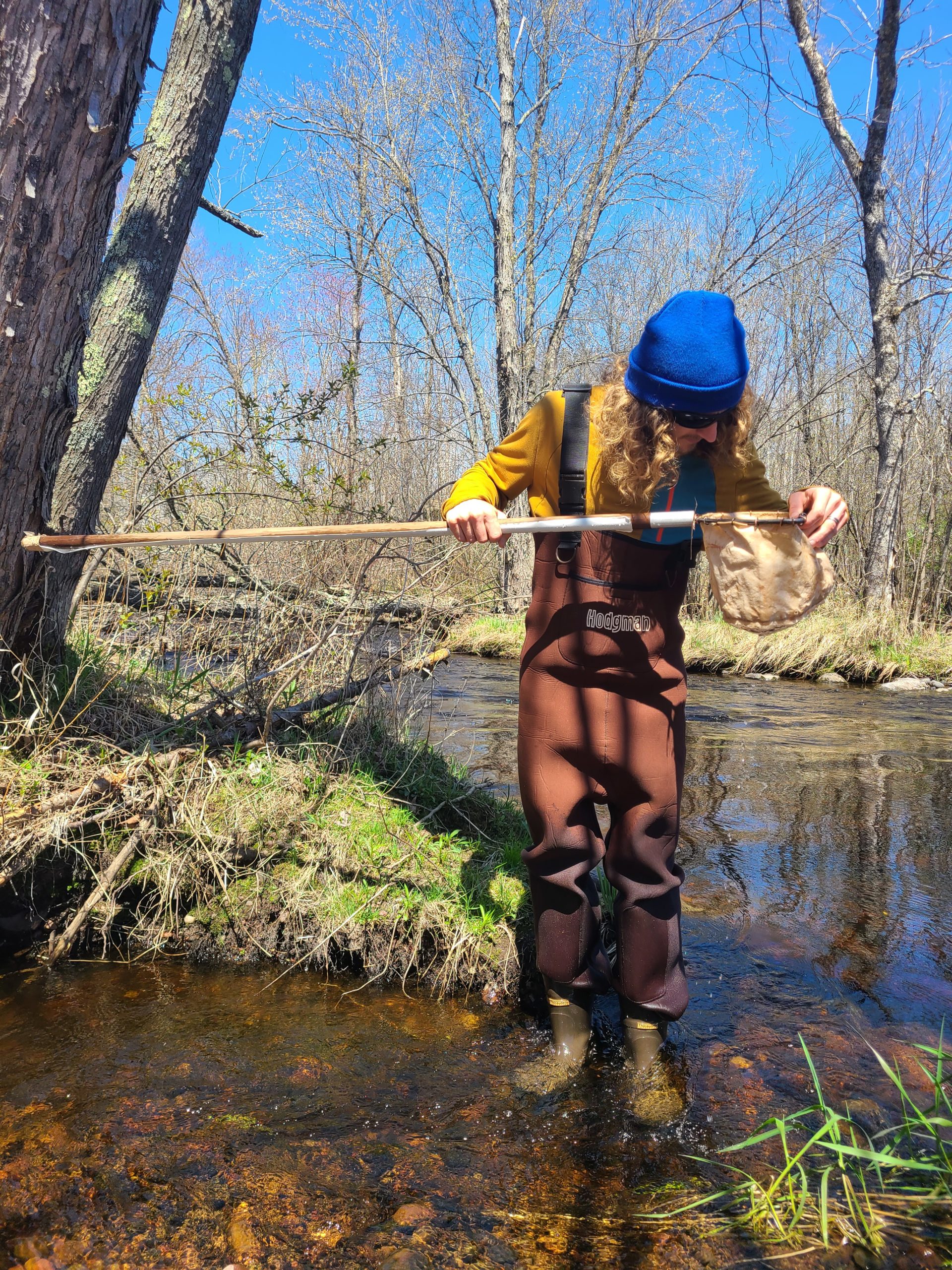
Today, over 20 years later, SRWA has an established monitoring program. Members train volunteers to visit streams and rivers to collect data. Through these volunteers, SRWA has data on over 50 tributaries in the Lake Superior watershed. They collect data on both the water chemistry of the tributaries, as well as the life they find there. This helps them understand how water conditions affect organisms.
Every spring and fall, volunteers visit their sites and sample macroinvertebrates, or small organisms that spend most or all their lives living on the stream bottoms. Many are larvae for insects you might know, such as dragonflies. After collecting samples, the volunteers identify each type of macroinvertebrate.
Each species has a different tolerance for stress, such as pollution, changes in temperature, low oxygen, or flooding. So, along with their biological data SRWA also collects data such as temperature, the amount of oxygen available in the water, and turbidity, or the amount of sediment in the water. Some species are indicators of good water quality because they need very clear, cold water, with a lot of oxygen, while others can survive in dirtier or harsher conditions. By seeing which macroinvertebrates live in each stream, scientists can learn about the health of the water.
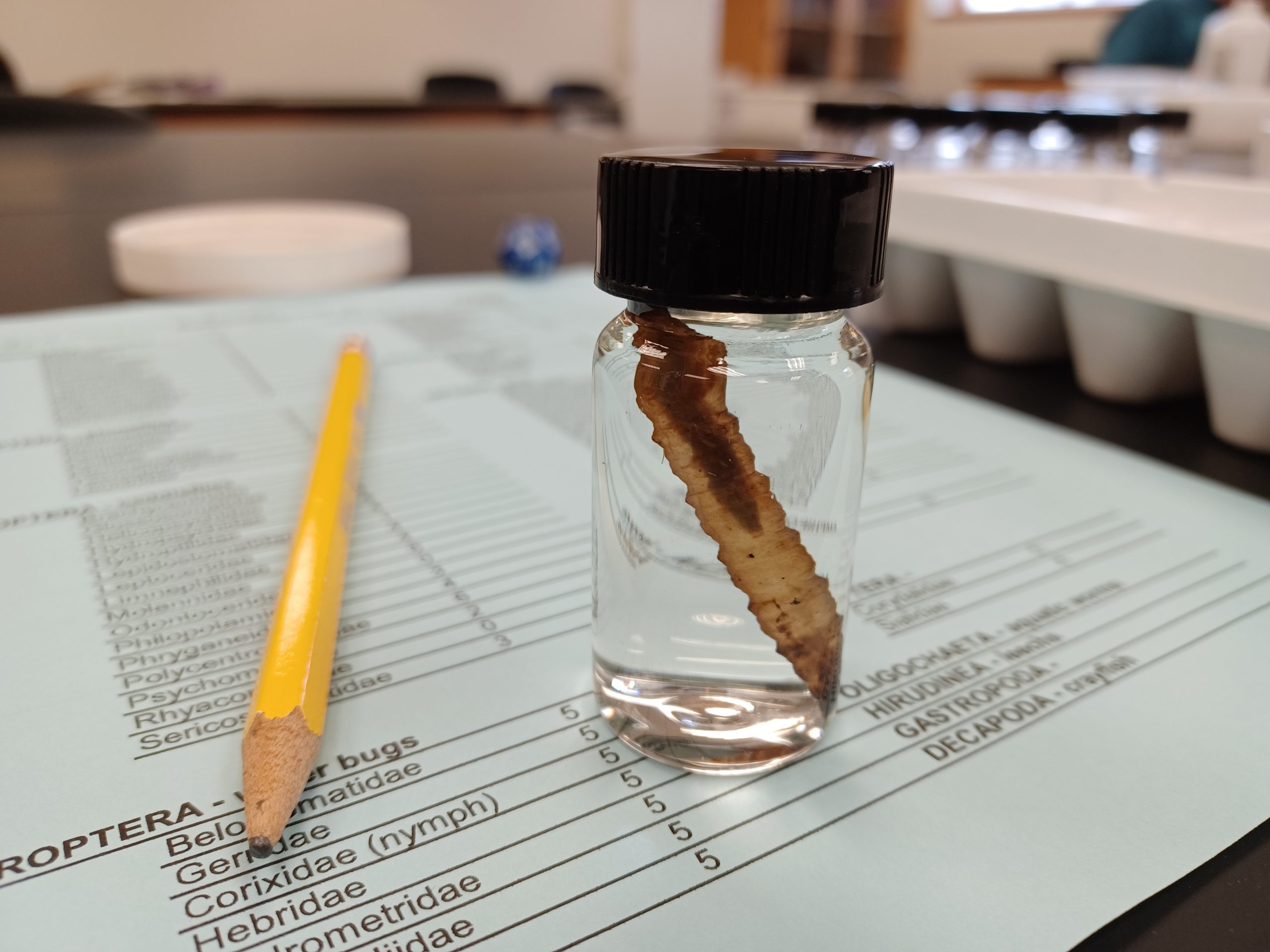
Two scientists, Will and Emma, are now analyzing over 20 years of volunteer data to identify trends and patterns. They want to see whether the water quality variables of temperature, dissolved oxygen, and turbidity affect the types of macroinvertebrates that can live in the tributaries. If there are a lot of sensitive indicator species in the sample, that is a good sign because it means the water quality is high. If they only find tolerant species, the water quality is likely poor, because indicator species were unable to survive in the environmental conditions at that site.
To do so, they use a tool called the Hilsenhoff Biotic Index. This index looks at which macroinvertebrates are present and how tolerant they are to pollution. HBI uses the living organisms that live at a site to provide an assessment of stream health over time, unlike chemical water tests which provide a snapshot of conditions at the time of testing. The index assigns a number from 1 to 10 based on the number and type of species in the sample. Lower numbers mean excellent water quality, and higher numbers mean poor water quality.
Featured Scientists: Emma Holtan and Will Kendall with community volunteers from Superior Rivers Watershed Association. Written with: Andrea Pokrzywinski from Ashland High School.
Flesch–Kincaid Reading Grade Level = 10.8
Additional Teacher Resources:
Macroinvertebrate sampling is a common way to assess stream health in many regions. There are additional lesson plans and educational resources that you can use to supplement or expand on this Data Nugget activity. Andrea, a local teacher, works with SRWA to bring watershed monitoring into the classroom. She has put together a webpage with additional resources that she uses with her students.
On this webpage you will find:
- Information on how to calculate the Hilsenhoff Biotic Index
- Images and identification of common stream macroinvertebrates and their classification on the gradient from sensitive to tolerant
- Stream sampling data sheets
- Additional stream monitoring community science initiatives and programs with educational resources