


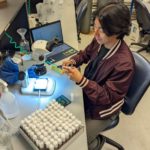
Aging is a natural process that happens in all living things. As organisms get older, their cells and DNA slowly become damaged. Some of this wear and tear happens naturally as cells do their jobs. Other damage can be brought on by stressful environmental conditions, such as high temperatures. Richard is a scientist interested in
insects
Tiny but mighty: leaf miners take on aspen trees
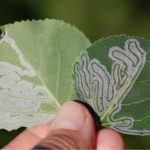
Caterpillars might look small, but can they actually be harmful? Yes, if there are enough of them! Aspen leaf miners are moths as adults, but before that, aspen leaf miner caterpillars are incredible herbivores. In the spring, they lay their eggs on the surface of leaves, and they sink into the outer cell layer. When they hatch, the
Size matters – and so does how you carry it!
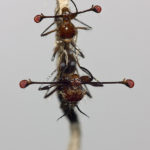
The activities are as follows: In the wild, animals compete for limited resources. Things like food, water, shelter, and even reproductive mates can be hard to come by. Animals with traits and behaviors that make them more likely to survive and reproduce are said to have higher evolutionary fitness. Some animals have evolved special traits that advertise
Ant wars!
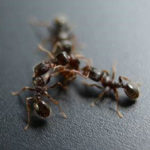
The activities are as follows: The ants crawling into and out of cracks along sidewalks are called pavement ants. They live in groups called colonies, which are made up of a few queens and many worker ants. A colony lives together inside a nest, a physical structure. Worker ants use their antennae to touch the bodies of other
David vs. Goliath
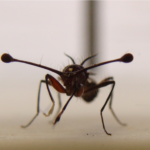
The activities are as follows: Teacher Guide Student activity, Graph Type A, Level 3 Student activity, Graph Type B, Level 3 Student activity, Graph Type C, Level 3 Grading Rubric Animals in nature often compete for limited resources, like food, territory, and mates. To compete for these resources, they use aggressive behaviors to battle with others of
Blinking out?
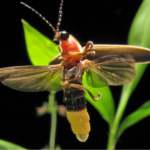
The activities are as follows: The longest surveys of fireflies known to science was actually started by accident! At the Kellogg Biological Station Long-Term Ecological Research Site, scientists work together to answer questions that can only be studied with long-term data. Their focus is to collect data in the same way over many consecutive years to look
Spiders under the influence
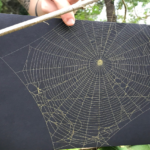
The activities are as follows: People use pharmaceutical drugs, personal care products, and other chemicals on a daily basis. For example, we take medicine when we are sick to feel better, and use perfumes and cologne to make ourselves smell good. After we use these chemicals, where do they go? Often, they get washed down our
Beetle, it’s cold outside!
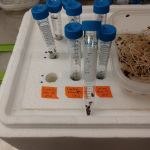
The activities are as follows: Teacher Guide Student activity, Graph Type A, Level 2 Student activity, Graph Type B, Level 2 Student activity, Graph Type C, Level 2 PowerPoint of images and chill coma video Grading Rubric Digital Data Nugget on DataClassroom Éste Data Nugget también está disponible en Español: Actividad para estudiantes, Tipo de gráfica
Tree-killing beetles
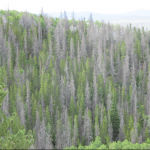
The activities are as follows: Teacher Guide Student activity, Graph Type A, Level 2 Student activity, Graph Type B, Level 2 Student activity, Graph Type C, Level 2 Grading Rubric A beetle the size of a grain of rice seems insignificant compared to a vast forest. However, during outbreaks the number of mountain pine beetles can
Why are butterfly wings colorful?
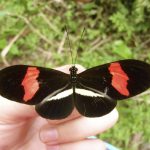
The activities are as follows: Teacher Guide Student activity, Graph Type A, Level 3 Student activity, Graph Type B, Level 3 Student activity, Graph Type C, Level 3 Grading Rubric Scientist Profile: Adriana Briscoe Digital Data Nugget on DataClassroom Éste Data Nugget también está disponible en Español: Actividad para estudiantes, Tipo de gráfica A Actividad para