The activities are as follows:
- Teacher Guide
- Student activity, Graph Type A, Level 4
- Student activity, Graph Type B, Level 4
- Student activity, Graph Type C, Level 4
- Superfund site map and descriptions
- PowerPoint of images
- Grading Rubric
- An adapted version of the original scientific paper
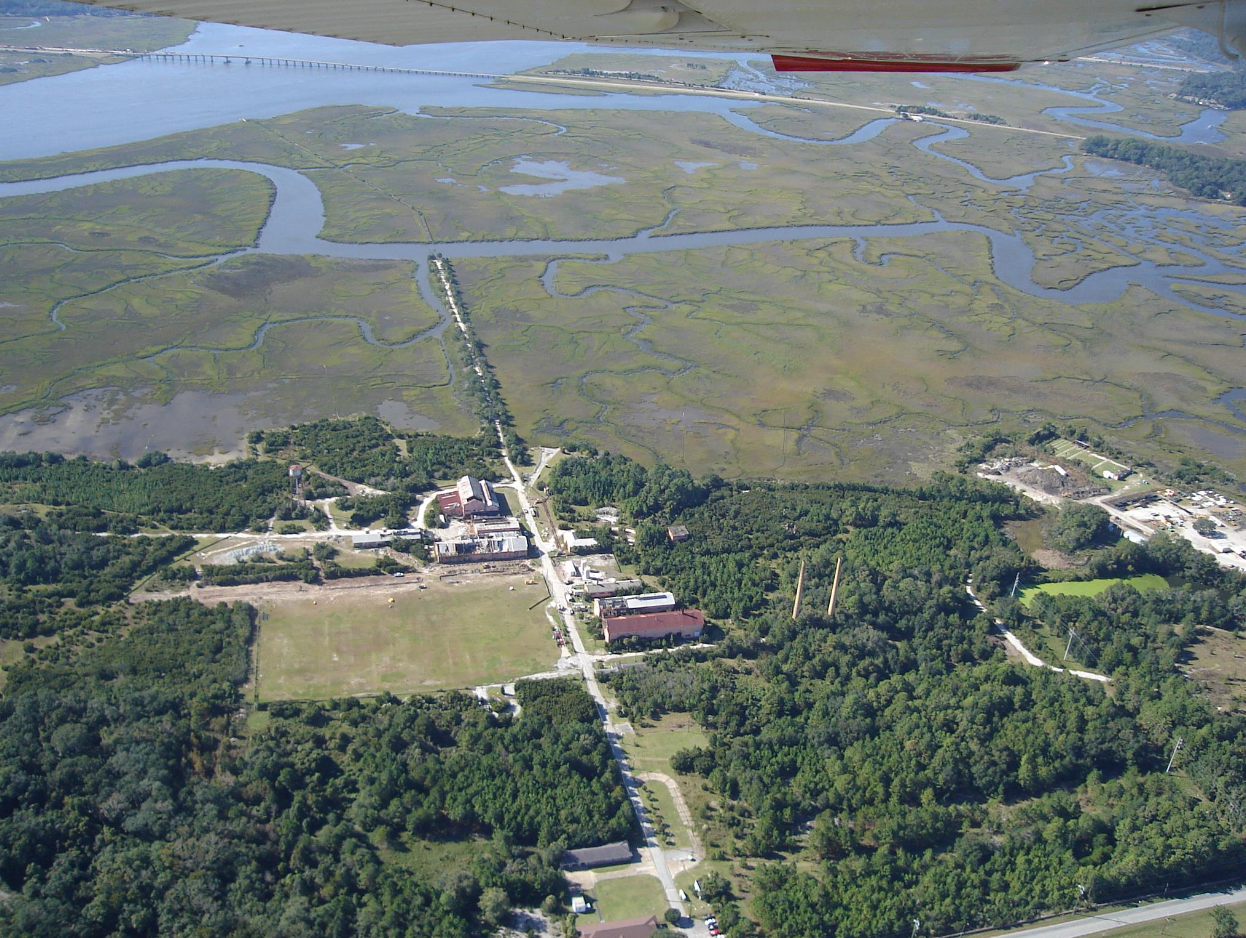
A Superfund site is a place that is so polluted by chemicals or other contaminants that it poses a risk to surrounding wildlife and people. These are often former industrial sites that polluted the land or water with toxic and hazardous waste.
In Glynn County, Georgia there are four Superfund Sites on the National Priorities List by the US EPA. These sites are found to be particularly hazardous. Research studies in the Glynn County have shown that these contaminants show up in the local environment. For example, they have found some of these chemicals in the nearby soil and water. They can also accumulate in the tissues of organisms and have been found in high levels in certain coastal animals, such as birds, fish, and dolphins. Eating fish from nearby rivers is likely one way that humans have been exposed to these chemicals.
Many residents have known about the pollution for a long time, but felt like their concerns were being ignored. Therefore, community members contacted scientists at the University of Georgia and Emory University for research expertise. Together, local residents, organizations and scientists designed a study to assess whether or not people living in Glynn County have been exposed to the industrial chemicals. It was critical that the results were shared back with the community so they could avoid future exposure to the harmful chemicals.
Together, the team decided to focus on a few chemicals of interest, specifically toxaphene and PCBs. Both types of chemicals do not break down easily in the environment. Once these compounds are in our environment, they can stay there for decades! For this reason, toxaphene and PCBs are known as “persistent” chemicals.
Toxaphene is a mixture made up of many different chemical compounds. Common toxaphene types include toxaphene-26 and toxaphene-50. Toxaphene was produced in Glynn County and used as a pesticide for over 30 years, primarily to kill boll weevils that ate cotton plants. It is thought to be a carcinogen, meaning that it has been linked to causing certain types of cancer. It is now banned in the United States, but it still remains in the environment in some places.
Polychlorinated biphenyls, called PCBs, are a group of synthetic chemicals that had many different industrial uses. PCBs were banned in the United States in 1979 due to their potential health effects, but were used in hundreds of industrial processes. PCBs may still be present in many different products we use today including transformers, plastics, paints and more! A PCB called Aroclor 1268 is the primary concern in Glynn County. Scientists can measure components of this chemical in the environment. In humans, PCBs are known to harm the immune, reproductive, endocrine, and nervous systems. PCBs are also probable carcinogens. Like toxaphene, PCBs are now banned.
The scientists and community members wanted to compare chemical levels in Glynn County residents to the general population to see if living near Superfund sites may have increased their risk of exposure to dangerous chemicals. One hundred adult residents from the area participated in this study. All participants had lived in the area for 10 years or more. Each participant completed a short survey that shared details of their lives in the area and gave a blood sample.
The scientist team at Emory University, led by Dana Barr, analyzed the blood samples for toxaphene and PCBs. These levels were then compared to levels found in the general reference population outside of Glynn County. Participants received their individual results, and a summary of the results was also shared at a community meeting.
Featured scientist: Dana Barr from Emory University with Anita Collins and Glynn County Community Partners. Written by: Laura Rogers and Healthy Coastal Neighborhoods Coalition.
Flesch–Kincaid Reading Grade Level = 10.2
There is one scientific paper associated with the data in this Data Nugget. The citation and PDF of the paper is below.
- Scovronick N, Lappe B, Pearson MA, Smith KA, Eick SM, D’Souza PE, Panuwet P, Kong M, Yakimavets V, Stephenson R, Barr DB. Assessment of human exposure to uncommon industrial toxicants in Glynn County, Georgia. Environmental Pollution. 2025
- The same paper, written at a middle/high school reading level by Science Journal for Kids, can be found here.