Live fast, die young?

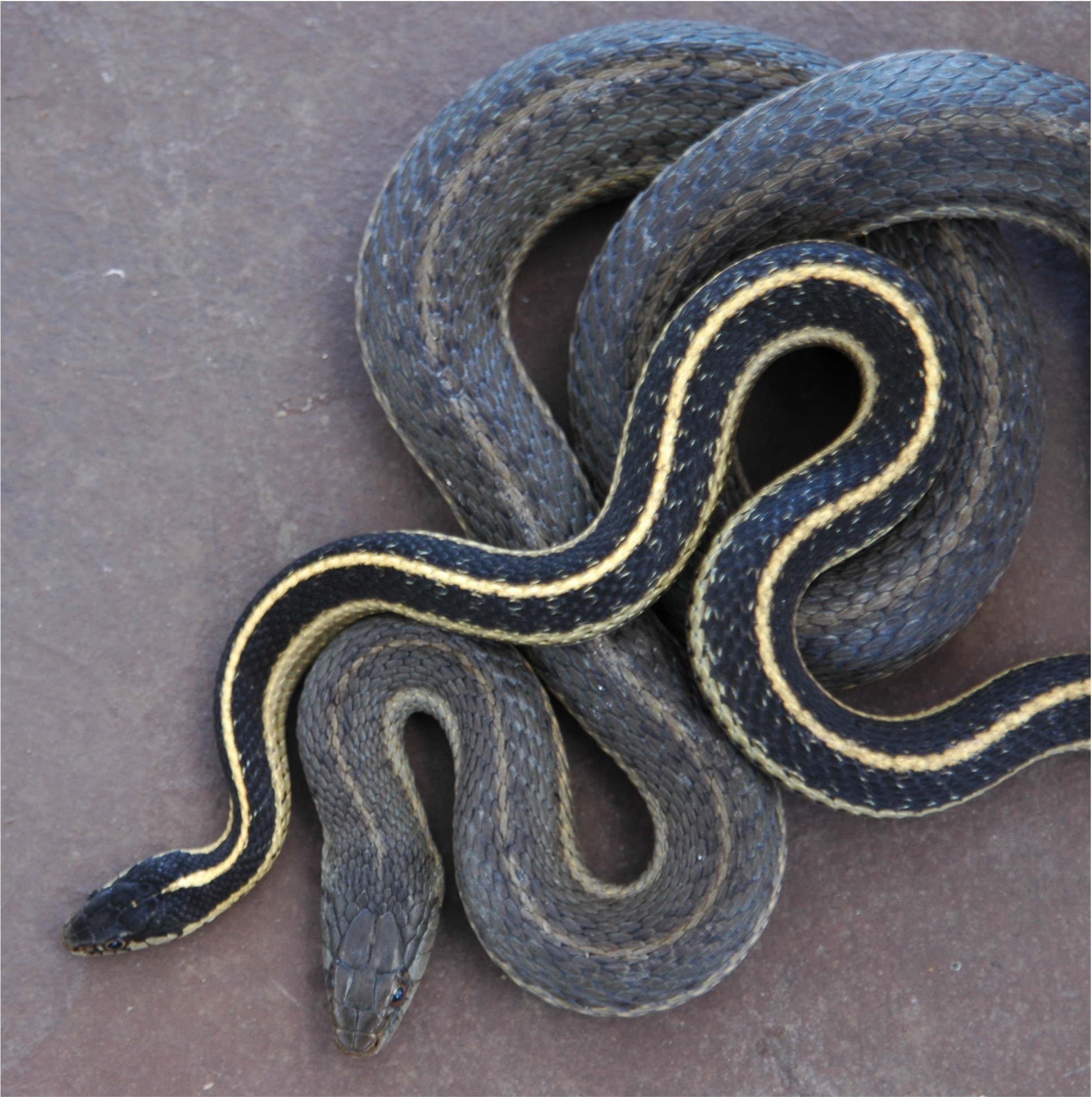
Fast living snake (grey checked)
Slow living snake (dark with yellow stripe)
The two garter snake ecotypes – Fast living snake with grey checked pattern, and slow living snake with dark with yellow stripe.

Garter snakes are a common sight across North America, but one small species in Northern California has helped scientists learn a lot about how animals adapt to their environment. Since 1972, a long lineage of scientists has studied these snakes and passed their data down through generations. This long-term dataset allows scientists to ask questions about how replicate populations change over time.

These garter snakes live in two very different types of habitats. Some populations live along lakeshores at low elevations. These areas have rocky shorelines, warmer temperatures, and steady access to water and food like small fish and frogs. However, these snakes also face more predators. Other populations live in high-elevation mountain meadows. These habitats are cooler and covered in grass. Water and food are not always available and can change each year depending on snow and rain. Because these habitats are so different, the snakes in each place experience different challenges.

Over time, these differences have led to the evolution of two distinct ecotypes. Ecotypes are groups within a species that have adapted to their local environment. The lakeshore and meadow snakes differ in both their physical traits and their genetics. They also differ in how they grow, reproduce, and survive—traits known as life history strategies.

Life history strategies are often described along a spectrum from “fast” to “slow.” Lakeshore snakes have a “fast” life history. They grow quickly, reach adulthood sooner, are larger at adulthood, and produce larger and more frequent litters of offspring. In contrast, meadow snakes have a “slow” life history. They grow more slowly, reach adulthood later, have a smaller body size, and have fewer, less frequent litters.

Kaitlyn became interested in these snakes after a surprising start to her career. Interested in reptiles since childhood, she originally moved to Texas to join a lab that was studying turtles. Unfortunately, only a few weeks in, the grant money supporting her position fell through – right after she moved from Wisconsin to Texas! Luckily, another researcher invited her to join a lab studying snakes. After earning her Master’s degree, Kaitlyn continued this work during her PhD with her collaborator, Anne.

Kaitlyn and Anne wanted to understand how these snake populations are surviving today, especially after years of severe drought in California. They wondered if survival rates had changed over time and whether snakes in lakeshore and meadow habitats survived differently.
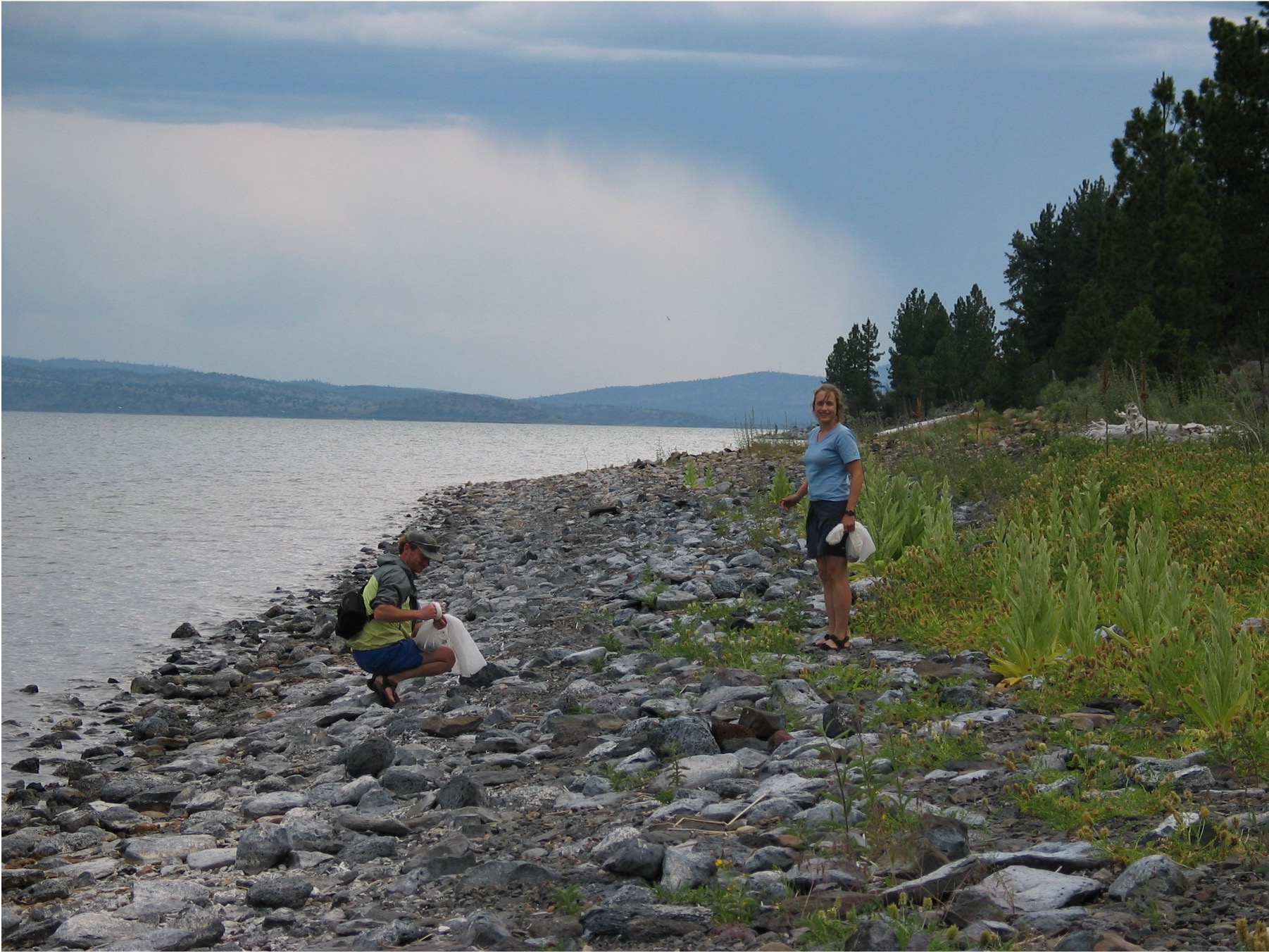
Scientists standing on a rocky lakeshore looking for snakes.
Flipping rocks and reaching into stinging nettle at Lakeshore sites.

To answer these questions, Anne and Kaitlyn wanted to take a fresh look at snake survival rates. They went out into the field to collect their own data, and compared their estimates to over 50 years of prior data collection. Both the historic and current data were collected using the method called capture-mark-recapture. In this method, researchers catch snakes, measure traits like size and weight, and give each snake a unique mark before releasing it back into the wild. If a snake is caught again later, scientists can track how it has grown. Not all snakes are recaptured. These data can be used to estimate survival rates, though some snakes may have moved away or avoided being caught.

Because it is hard to know the exact age of each snake, Kaitlyn grouped them into four age classes based on size: neonates (newborns), juvenilesyoung adults, and old adults. She then used statistical models to use her capture-mark-recapture dataset to estimate the probability of survival for each group. Kaitlyn predicted that meadow snakes, with their “slow” life history strategy, would have higher survival rates than lakeshore snakes. She also expected this difference to be greatest in young snakes.

Featured scientists: Kaitlyn Holden (she/her) and Anne Bronikowski (she/her) from Michigan State University

Flesch–Kincaid Reading Grade Level = 9.4

Additional Teacher Resources:

  • Scientist profile: Anne Bronikowski has a scientist profile to supplement this activity. Have students read more about her research, personal life, and career advice as a way to share contemporary scientist role models with students!
  • You can learn more about the IISAGE (Integration Initiative: Sex, Aging, Genomics, and Evolution) project here. This initiative is a collaborative effort to learn more about the mechanisms of sex-specific differences in aging and features research with a variety of organisms.
  • Visit this page for additional scientist profiles and Data Nuggets featuring IISAGE research.
The chromosome advantage: Lifespan differences across sexes

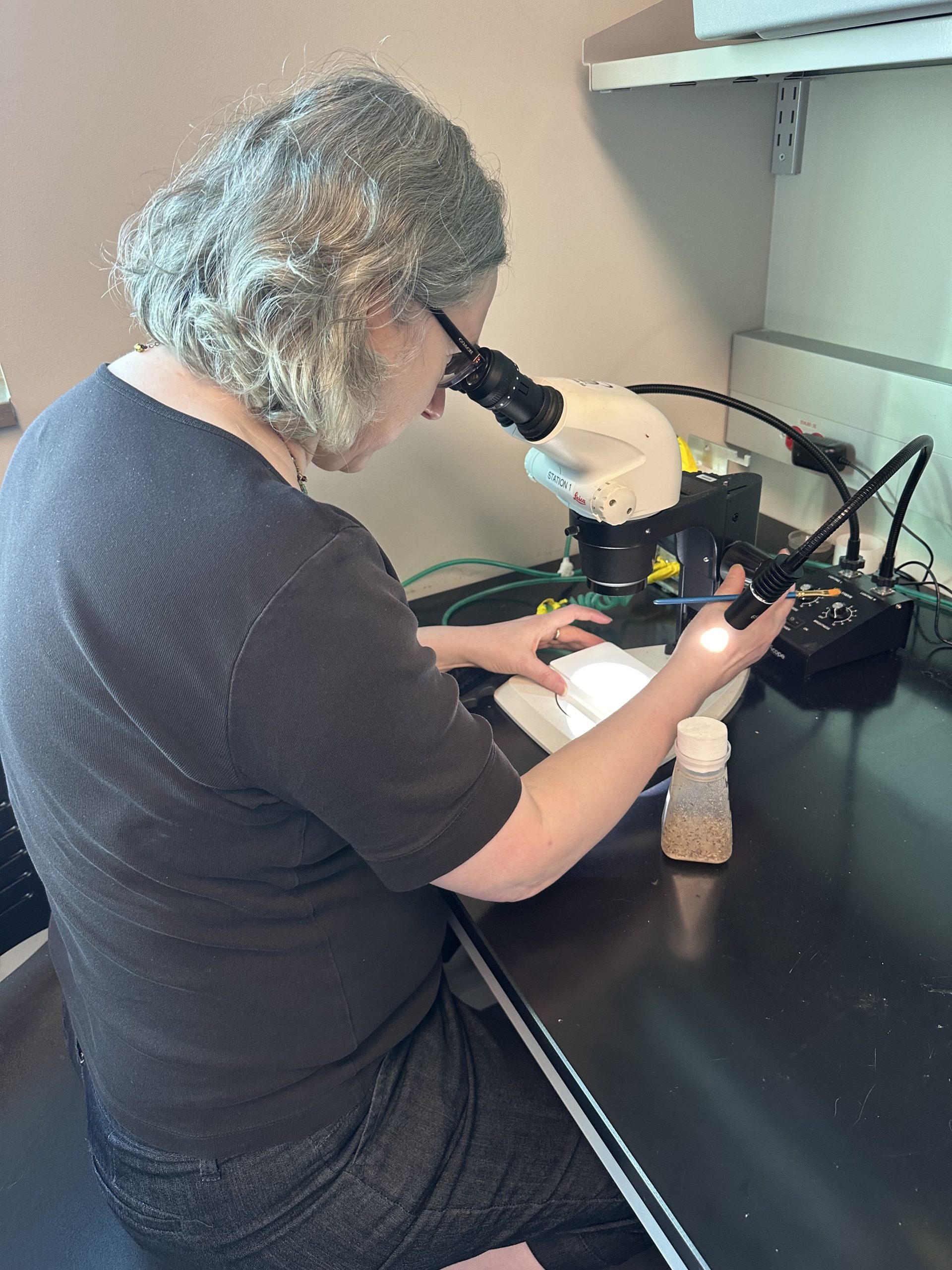
Nicole Riddle looking at fruit flies under the microscope

The activities are as follows:

Many factors affect lifespan, or how long an organism lives. Different species, and individuals within a species, will all live to different ages. Across species, things like body size, rate of metabolism, and genetics can all come into play. For example, larger animals tend to live longer than smaller organisms. Within a species, genetics and environmental conditions, such as being able to find food, the presence of predators, and disease, will also impact survival.

Scientists have also noticed that in many animal species, one sex tends to live longer than the other. Sometimes it is the males, and sometimes it is the females. Why might this be? To better understand aging differences across sexes, a group of scientists decided to work together. Each scientist studies a different species, so by combining their knowledge, they can look for patterns and see if there are consistent factors that are the cause.

Jamie Walters running DNA extractions in the lab.

Nicole and Jamie are two scientists in this group. Nicole studies fruit flies, while Jamie studies moths and butterflies. Even though fruit flies and moths are both insects, sex is determined differently. In most animals, biological sex is determined by specific chromosomes. These structures are inside cells and carry genetic information. Individuals usually have two sex chromosomes. Whether those two chromosomes are the same or different often determines whether their bodies develop as male or female.

In fruit flies, females have two of the same sex chromosomes (XX), while males have two different sex chromosomes (XY). In moths and butterflies, the pattern is reversed. Males have two of the same sex chromosomes (ZZ), while females have two different ones (ZW).

Nicole and Jamie wondered if having two different sex chromosomes might affect lifespan. When an individual has only one copy of a particular chromosome—like the X in XY males or the Z in ZW females—there is no second copy for the genes on that chromosome. If that single copy contains a harmful mutation or becomes damaged, the organism cannot rely on a second copy to make up for it. On the other hand, individuals with two of the same sex chromosomes (XX or ZZ) have a kind of “genetic backup”. This extra protection might reduce the risk of problems that could lead to an earlier death.

To test their idea about sex chromosomes and lifespan, Nicole and Jamie designed an experiment called a survival assay. A survival assay is a laboratory experiment in which scientists carefully track how long organisms live under controlled conditions. By keeping the environment consistent, scientists can focus on the specific factor they want to study.

Nicole works with fruit flies (left) and Jamie studies pantry moths (right). 
 
Plodia interpunctella female by Pekka Malinen, Luomus is licensed under CC BY-SA 4.0.

Nicole performed her survival assay with the fruit fly species, Drosophila melanogaster. Jamie worked with a pantry moth species called Plodia interpunctella. Both scientists already raise these species in their labs and carefully document the life cycles and age of each individual.

To set up their assays, Nicole and Jamie chose individuals that had emerged from the pupae stage around the same time. This step was important because they wanted to make sure all individuals had the same starting point. If some individuals had emerged a lot sooner, the results would not be accurate.

Nicole collected 100 female and 100 male fruit flies, and Jamie collected 60 male and 60 female moths. The insects were given plenty of food and kept in good environmental conditions, such as appropriate temperature and humidity. By reducing stress, they could better observe natural lifespan differences between males and females, rather than differences caused by harsh conditions.

Each day, Nicole and Jamie recorded how many males and females were still alive. This careful daily tracking allowed them to see how survival changed over time. The survival assay continued until the last individual had died. By the end of the experiment, Nicole and Jamie had detailed data showing how long males and females lived in each species. These results would help them test whether having two identical sex chromosomes—or two different ones—might influence lifespan.

Featured scientists: Nicole Riddle (she/her) from the University of Alabama at Birmingham and Jamie Walters (he/him) from the University of Kansas.

Flesch–Kincaid Reading Grade Level = 9.9

Additional Teacher Resources:

  • Scientist profiles: Nicole Riddle and Jamie Walters both have scientist profiles to supplement this activity. Have students read more about their research, personal lives, and advice they have as a way to share contemporary scientist role models with students!
  • You can learn more about the IISAGE (Integration Initiative: Sex, Aging, Genomics, and Evolution) project here. This initiative is a collaborative effort to learn more about the mechanisms of sex-specific differences in aging and features research with a variety of organisms.
  • Visit this page for additional scientist profiles and Data Nuggets featuring IISAGE research.