


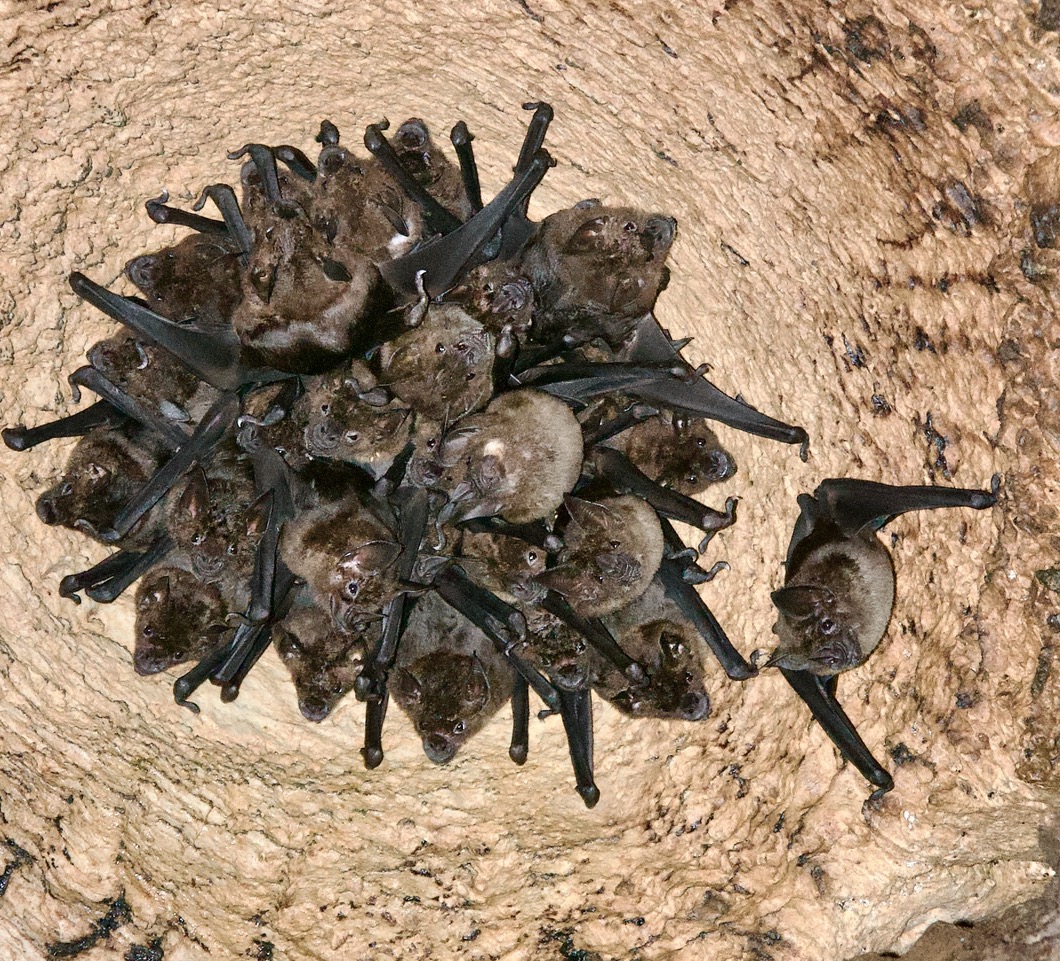
dominant male next to them.
The activities are as follows:
- Teacher Guide
- Student Activities, Graph Types A-C, Level 4
- Grading Rubric, CER Tool, and Other Resources
Maintaining a strong immune system is essential for animals to protect themselves from diseases. Diseases can be caused by bacteria, viruses, or other pathogens. The immune system has different types of defenses. Some defenses respond quickly to many different threats, while others develop targeted responses to specific pathogens.
Neutrophils are short-lived white blood cells that provide a rapid, first-line defense against general infections. Lymphocytes are long-lived white blood cells that can learn to recognize pathogens, such as a particular virus, and are important for targeted immune responses.
Gerald is a scientist who studies greater spear-nosed bats, a species found in Central and South America. Gerald and his research team want to know why there is so much variation in immune defenses within this species. He had found that some individuals invest more in neutrophils for rapid defense, while others invest more in lymphocytes for long-term protection.

Gerald has been studying these bats for many years and has also noticed that males usually don’t live as long as females. He suspected that how the sexes invest in their immune systems could be part of the reason. In this bat species, males compete for the opportunity to reproduce during the mating season, which occurs in December and January. The dominant males each defend a group of up to 25 females, which they mate with. However, this aggressive competition uses a lot of energy and males often get injured during fights. The males get bitten, transferring pathogens and leaving them with scars and wounds.
In contrast, female bats invest more energy in reproduction through the care that they provide their offspring. After birth, which occurs in April or May, females nurse a single offspring through lactation. Gerald thought that differences in pathogen threat across the sexes could affect their immune defense strategy. With frequent fighting, males would invest more in neutrophils to increase their general defense. With less immediate threat, females may invest more in long-term targeted defense through lymphocytes.
Before they could test their ideas, Gerald and his team had to identify the best way to record data on immune investment. They compared the numbers of neutrophils and lymphocytes within an individual by the neutrophil-to-lymphocyte ratio (NLR). A higher NLR indicates the animal is investing more in neutrophils and is allocating more energy toward rapid-response defenses. A lower NLR indicates the animal is investing more in lymphocytes and long-term targeted responses to pathogens.
Gerald and his team briefly captured wild bats to take a blood sample and record their sex. The bats were then released. The researchers did this during three different seasons: mating, lactation, and post-lactation over many years. Mating season is when the males compete to reproduce with females. Lactation season is when the bats have already reproduced, and the females are nursing the young bats. Post-lactation season is when females are done providing nutrition to young, and both males and females are not spending much energy on reproduction. Gerald and the team analyzed 511 blood samples in the lab. For each one, they looked at 100 white blood cells and documented how many were neutrophils and lymphocytes.
Gerald predicted that males would have higher NLR than females because males face aggressive competition and fighting. He also predicted that for both sexes, NLR would be higher during the mating season because it is an especially demanding time, and food is less abundant at that time of the year.

Featured scientist: Gerald Wilkinson from University of Maryland
Flesch–Kincaid Reading Grade Level = 10.5
Additional Teacher Resources:
- The research captured in this activity has been published. The paper, “Leukocyte profiles reveal sex and age differences in immune investment in a polygynous bat,” by Gerald S. Wilkinson, Jillian A. Kaiser, Katherine N. Armenta, Ana S. G. Cunningham, Severine B. S. W. Hex, Alexis M. Lawson, and Jack G. Rayner, was published in the Journal of Animal Ecology on June 30, 2026.
- A researcher in Gerald’s lab recently published a paper documenting how often males fight by analyzing videos of bats.
- Students can read more about the scientist’s interpretation of these results in a press release about this research.
- This activity features a variable called neutrophil-to-lymphocyte ratio (NLR), found through blood tests. While the research here is looking at NLR and immune response variability in a bat species, NLR is commonly used in human biomedical research and health assessments. To make connections to human biology, check out these resources:
- The Khan academy unit on immunology has video lessons on how neutrophils act as fast-acting innate responders and how lymphocytes drive targeted adaptive immunity.
- Ultalabtests and Labcorp, health testing companies, have diagrams, clinical overviews, and descriptions of NLR’s purpose in human medical assessments.
- There are also scientific journal articles about NLR that you could use to introduce your students to more advanced scientific reading:
- Buonacera et al. 2022. Neutrophil to Lymphocyte Ratio: An Emerging Marker of the Relationships between the Immune System and Diseases.
- Li et al. 2024. Association between the neutrophil-to-lymphocyte ratio and cancer in adults from NHANES 2005–2018: a cross-sectional study.
- Keret et al. 2026. Neutrophil-to-lymphocyte ratio as a biomarker for disease onset and mortality risk in SSc: a real-world national cohort study. Rheumatology (Oxford). 2026 65(2):keaf664. doi:10.1093/rheumatology/keaf664. PMID: 41365835.
- This research is a part of the Integration Initiative: Sex, Aging, Genomics, & Evolution (IISAGE). You can have your students explore more Data Nuggets and scientists’ profiles from this research group on our IISAGE educational materials page.