


- Teacher Guide
- Student activity, Graph Type A, Level 2
- Student activity, Graph Type B, Level 2
- Student activity, Graph Type C, Level 2
- Powerpoint of images
- Grading Rubric
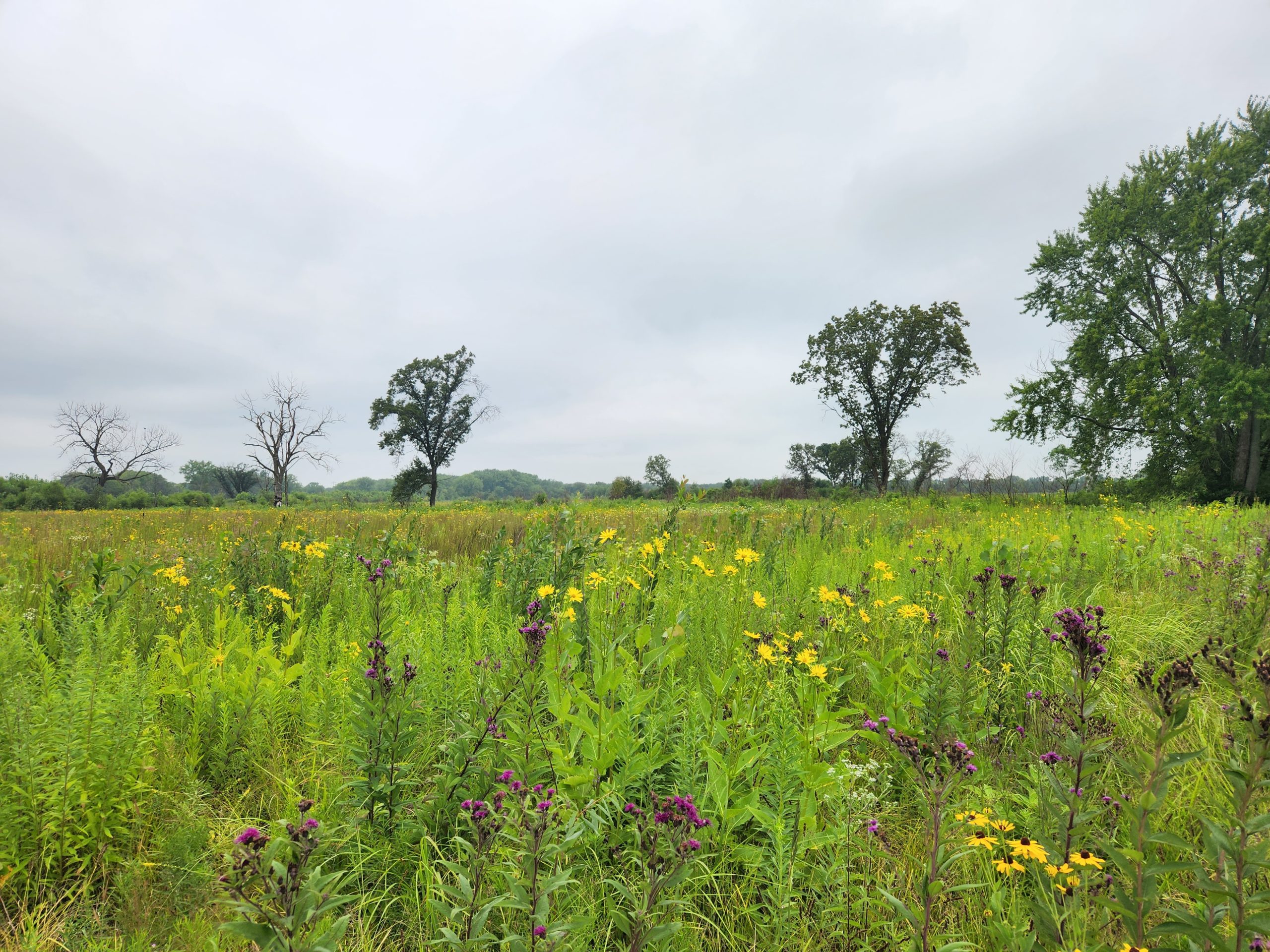
Illinois is called the “Prairie State.” Historically, 60% of the state was covered in different types of prairies, or open grassy landscapes with few trees. As far as the eye could see, fields were filled with colorful wildflowers, grasses, and all the species above and below ground that rely on them. However, today only 0.01% of the prairies remain across the whole state! These undisturbed areas are known as remnant prairies, and despite their small size, they are still home to a diverse community.
What happened to the rest of the prairies? Most were converted by people into agricultural fields to grow crops for food. The soils below prairies are rich in nutrients, and the agricultural lands in Illinois today provide food consumed by millions.
Nick is a land manager whose passion is prairies. In addition to protecting and studying remnant prairies, he creates restored prairies by planting prairie plants back into agricultural areas where they were historically found. However, Nick and other land managers are finding something surprising – the restored prairies do not look like the remnant prairies. He noticed that some of the native plants come back and thrive in the restored prairies, while others do not.
To investigate these missing species, Nick partnered with a local scientist, Mike. Mike grew up in rural Michigan and has always been fascinated with biodiversity. He is passionate about bringing back missing species, because he knows even just one missing plant can have a cascading effect through an ecosystem. For example, wild lupine plants are a key food source for the endangered Karner blue butterfly. When prairie restorations have higher diversity, we’re more likely to benefit other species.
Nick and Mike want to figure out why some species re-establish and others do not. They thought the key might lie belowground. From Mike’s past research, he knew that many prairie plants species form beneficial relationships with microbes belowground, called mutualisms. Could the root of the problem be explained by what is happening below ground? If these mutualist partners are missing in the soil, some plant species may not be able to survive.
One mutualist in prairies is called arbuscular mycorrhizal fungi, or AMF. Plants supply these fungi with sugars from photosynthesis. AMF help plant roots gather nutrients and water from the soil. AMF are common in prairie soils, but are often missing from soil that has been used for agriculture. Agriculture removes AMF in several ways. Tractors till the soil, disturbing the fungi below ground. Chemicals may be sprayed to kill harmful microbes, but these chemicals can also kill beneficial fungi, like AMF.
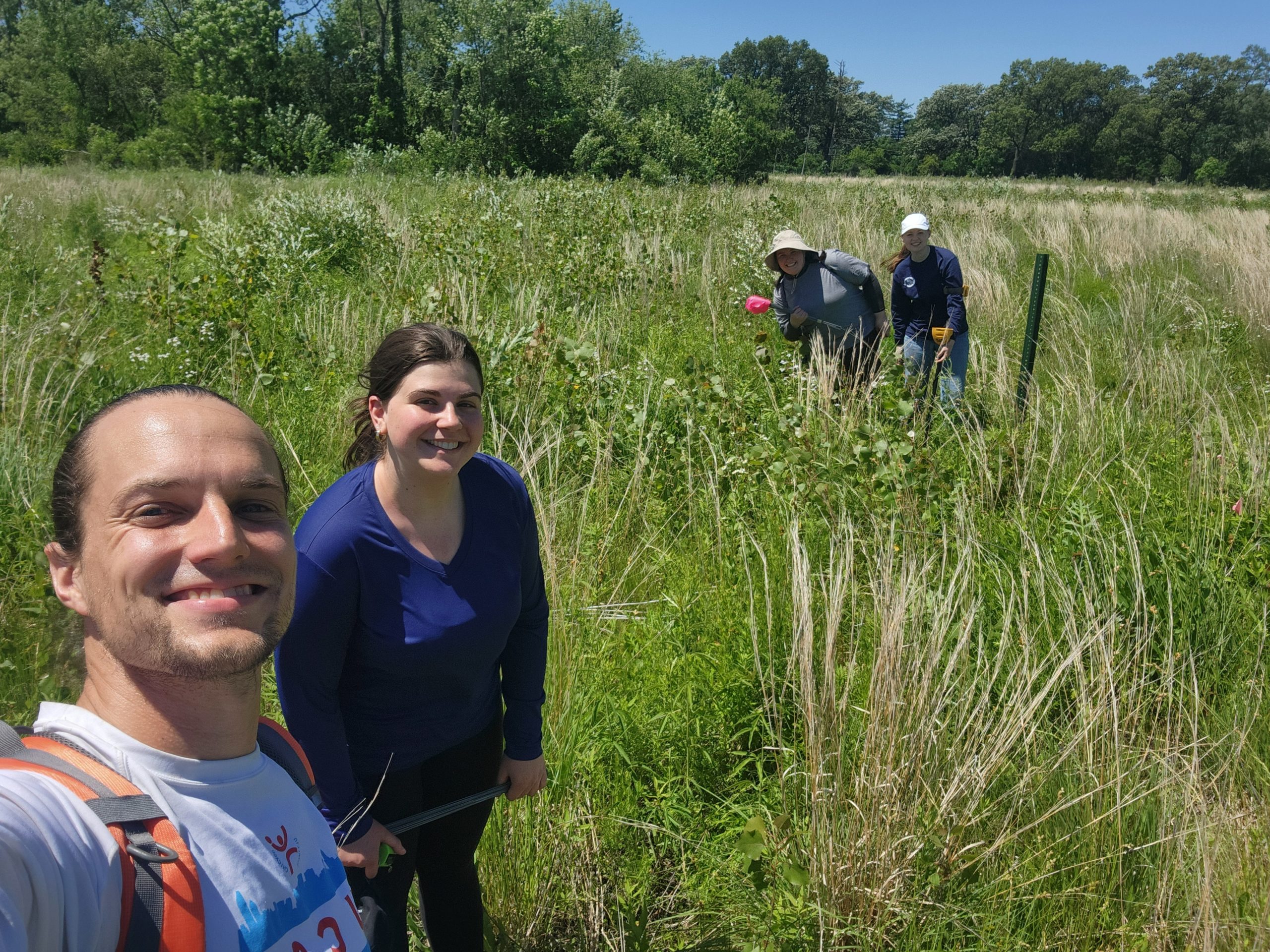
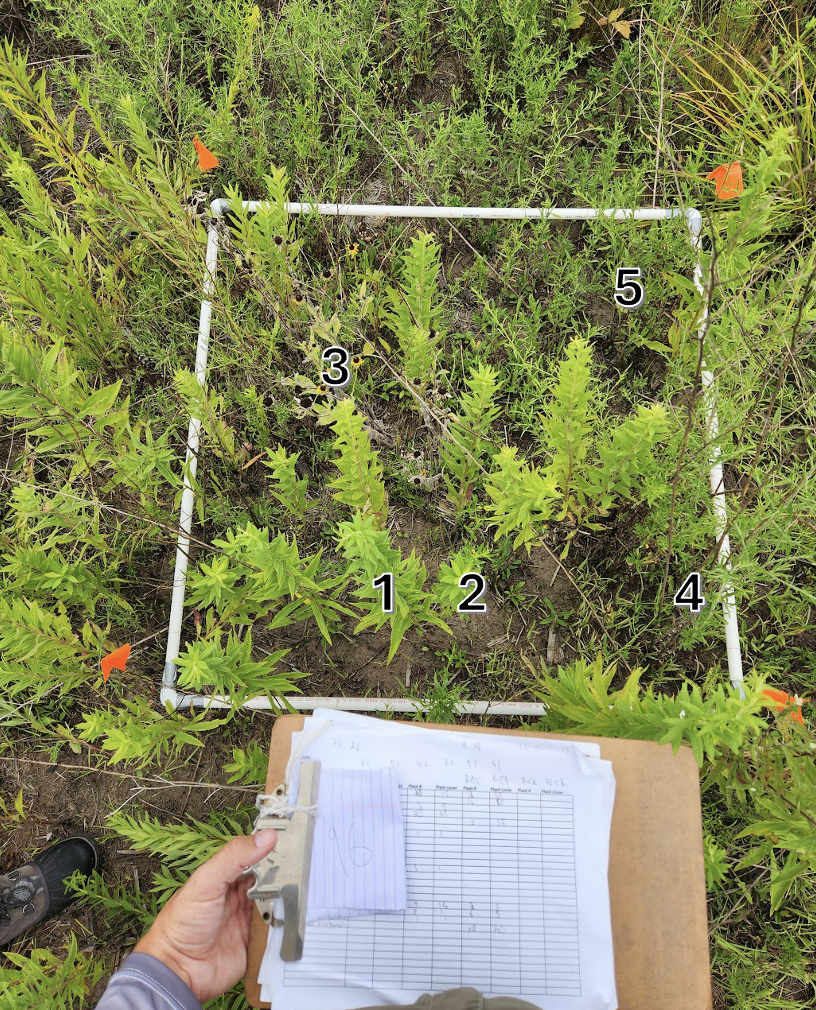
Nick chose an experimental site that was historically a sandy prairie, but had been used as a farm more recently. He used AMF originating from local remnant sand prairies to add to the experimental plots. Nick used a seed spreader to launch the AMF along the base of the plants. He set up three treatments that differed in how much AMF was applied: 1) a low level of AMF, 2) a high level of AMF, and 3) a control where no AMF was added. This setup was repeated 5 times in experimental blocks, or similar rectangular plots.
After the growing season, Mike and his lab identified the plant species in each block. To help out, Jeremy joined Mike’s lab after finishing graduate school. He was a good fit because he had been working with similar data. Jeremy used the full dataset to calculate species richness, or the number of different plant species in each block.
Featured Scientists: Mike Grillo and Jeremy Davis from Loyola University-Chicago and Nick Budde from the Forest Preserve District of Will County, Illinois. Written with Kerrie Rovito and Katarina Alvarado from Chicago Public Schools. Funding from the Walder Foundation.
Flesch–Kincaid Reading Grade Level = 8.8
Additional Teacher Resources:
If you would like to show students a remnant prairie that is close to where the scientists collected their data, you can see a video here.
You can see a video of Kankakee Sands, the area where the data were collected, here.
Videos about mycorrhizal fungi: