


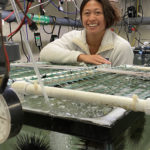
The activities are as follows: Imagine you are a sea urchin. You’re a marine animal that attaches to hard surfaces for stability. You are covered in spikes to protect you from predators. You eat giant kelp – a type of seaweed. You prefer temperate water, typically between 5 to 16°C. But you’ve noticed that some days
animals
Poop, poop, goose!
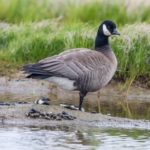
The activities are as follows: Each spring, millions of birds return to the Yukon-Kuskokwim Delta. This delta is where two of the largest rivers in Alaska empty into the Bering Sea. It is also one of the world’s most significant habitats for geese to breed and raise their young. With all these geese coming together in one
Sink or source? How grazing geese impact the carbon cycle
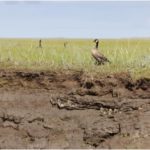
The activities are as follows: “If it wasn’t for the geese, you and I would not be here today because our ancestors would not have made it. When long, hard winters emptied people’s food caches early, starvation loomed. Return of geese in April saved us.” – Chuck Hunt, born and raised on the Yukon-Kuskokwim Delta
Size matters – and so does how you carry it!
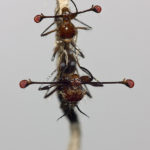
The activities are as follows: In the wild, animals compete for limited resources. Things like food, water, shelter, and even reproductive mates can be hard to come by. Animals with traits and behaviors that make them more likely to survive and reproduce are said to have higher evolutionary fitness. Some animals have evolved special traits that advertise
Mowing for Monarchs – Extension Activities
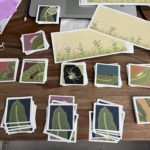
Gabe Knowles has developed and piloted several data activities to accompany these Data Nuggets activities. For the first activity, Gabe developed an extension to bring his data into elementary classrooms. Using beautiful art created by Corinn Rutkoski, the following are materials to print and use the activity in your classroom:
Benthic buddies
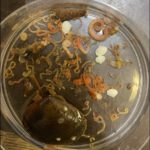
The activities are as follows: Lagoons are areas along the coast where a shallow pocket of sea water is separated from the ocean most of the time. During some events, like high tides, the ocean water meets back up with the lagoon. Coastal lagoons are found all over the world – even in the most northern region
Does more rain make healthy bison babies?
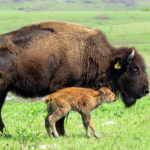
The activities are as follows: Teacher Guide Student activity, Graph Type A, Level 2 Student activity, Graph Type B, Level 2 Student activity, Graph Type C, Level 2 Grading Rubric The North American Bison is an important species for the prairie ecosystem. They are a keystone species, which means their presence in the ecosystem affects many other
Mowing for monarchs, Part II
In Part I you explored data that showed monarchs prefer to lay their eggs on young milkweeds that have been mowed, compared to older milkweed plants. But, is milkweed age the only factor that was changed when Britney and Gabe mowed patches of milkweeds? You will now examine whether mowing also affected the presence of
Ant wars!
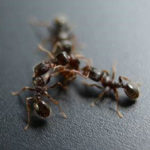
The activities are as follows: The ants crawling into and out of cracks along sidewalks are called pavement ants. They live in groups called colonies, which are made up of a few queens and many worker ants. A colony lives together inside a nest, a physical structure. Worker ants use their antennae to touch the bodies of other
David vs. Goliath
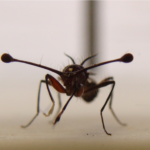
The activities are as follows: Teacher Guide Student activity, Graph Type A, Level 3 Student activity, Graph Type B, Level 3 Student activity, Graph Type C, Level 3 Grading Rubric Animals in nature often compete for limited resources, like food, territory, and mates. To compete for these resources, they use aggressive behaviors to battle with others of