


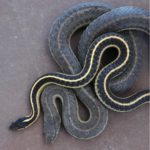
Garter snakes are a common sight across North America, but one small species in Northern California has helped scientists learn a lot about how animals adapt to their environment. Since 1972, a long lineage of scientists has studied these snakes and passed their data down through generations. This long-term dataset allows scientists to ask questions
adaptation
The science of stamen loss
The activities are as follows: Plants and animals have adaptations, or traits that help them survive and pass on more of their genes to the next generation. Flowers are a key adaptation for plants because they help the attract pollinators and reproduce. Flowers come in many different shapes, sizes, colors, and forms. While flowers as a
Anole’s new niche
The activities are as follows: Throughout our history, humans have been moving species around the world. In your own backyard there are likely multiple species that have come from different countries and mixed into your local ecosystem. Human movement of species has sped up in the last 150 years as we have gotten better at traveling
Size matters – and so does how you carry it!
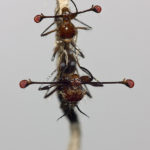
The activities are as follows: In the wild, animals compete for limited resources. Things like food, water, shelter, and even reproductive mates can be hard to come by. Animals with traits and behaviors that make them more likely to survive and reproduce are said to have higher evolutionary fitness. Some animals have evolved special traits that advertise
Benthic buddies
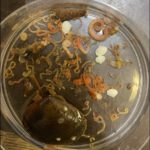
The activities are as follows: Lagoons are areas along the coast where a shallow pocket of sea water is separated from the ocean most of the time. During some events, like high tides, the ocean water meets back up with the lagoon. Coastal lagoons are found all over the world – even in the most northern region
Round goby, skinny goby
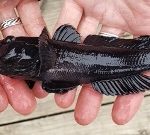
The activities are as follows: Teacher Guide Student activity, Graph Type A, Level 3 Student activity, Graph Type B, Level 3 Student activity, Graph Type C, Level 3 Full dataset available Grading Rubric Animals often have adaptations, or traits that help them live in certain environments. For fish, that can mean having a body shape that
Corals in a strange place
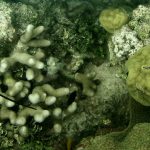
The activities are as follows: When you imagine a coral, you likely picture it living on a coral reef, bathed in sunlight, surrounded by crystal clear waters teeming with colorful fishes. But corals can actually live in a range of habitats, even habitats that are sometimes murky and much darker! As marine biologists, Karina and John
Fast weeds in farmer’s fields
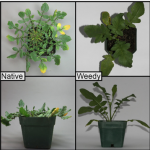
The activities are as follows: Weeds in agricultural fields cost farmers $28 billion per year in just the United States alone. When fields are full of weeds the crops do not grow as well. Sometimes weeds even grow better than the crops in the same field. This may make you wonder, how do weeds grow so
Hold on for your life! Part II
In Part I the data showed that, after the hurricanes, anole lizards had on average smaller bodies, shorter legs, and larger toe pads. The patterns were clear and consistent across the two islands, indicating that these traits are adaptations shaped by natural selection from hurricanes. At this point, however, Colin was still not convinced because
Hold on for your life! Part I
The activities are as follows: On the Caribbean islands of Turks and Caicos, there lives a small brown anole lizard named Anolis scriptus. The populations on two small islands, called Pine Cay and Water Cay, have been studied by researchers from Harvard University and the Paris Natural History Museum for many years. In 2017, Colin, one of the